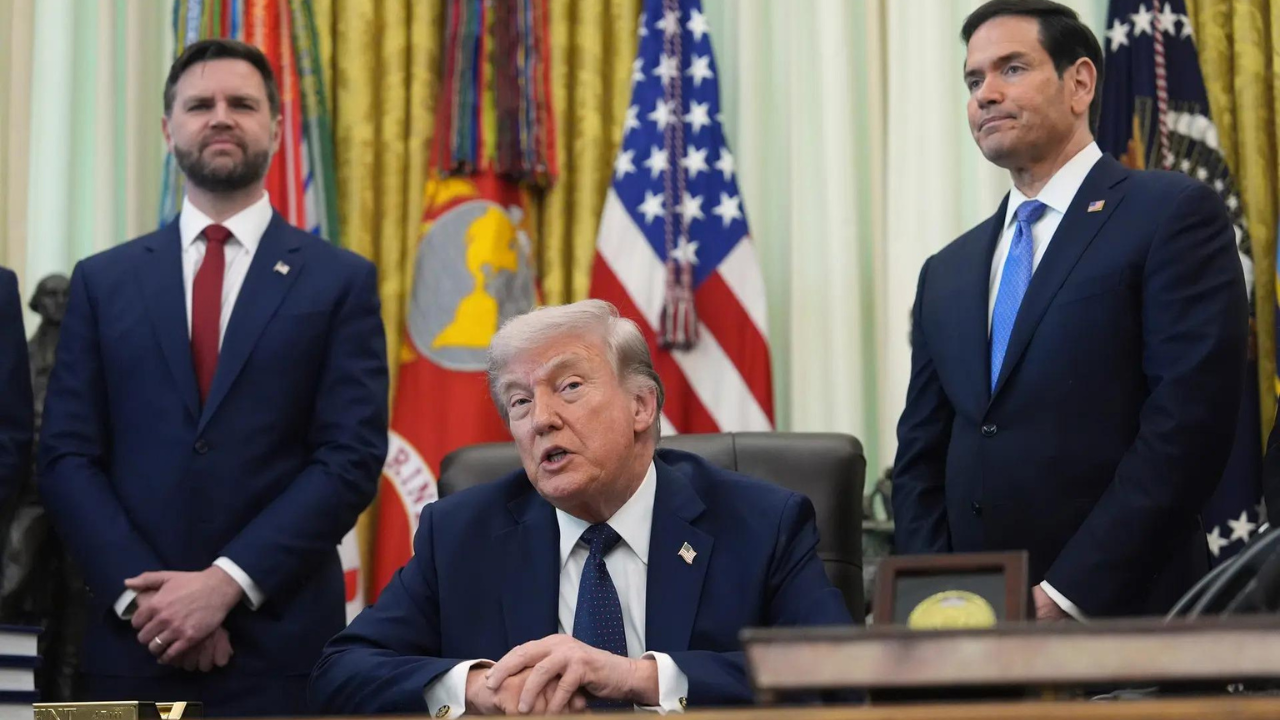
The political landscape is already buzzing with speculation about the 2028 Republican presidential nomination, and all signs point to Vice President JD Vance as the burgeoning frontrunner. Following a summer marked by significant foreign policy successes, a high-profile book release, and an exhaustive media campaign, Vance has seemingly eclipsed other potential contenders, including Secretary of State Marco Rubio, in the estimation of President Donald Trump. This rapid ascent has repositioned Vance from a prospective candidate to the undisputed heir apparent within the Republican hierarchy, fundamentally reshaping the trajectory of the party’s future.
For months, the inner circles of American politics, particularly within the Republican Party, engaged in a perpetual parlor game: who would secure President Trump's coveted endorsement for the 2028 presidential ticket? The contest, largely framed as a binary choice between Vice President JD Vance and Secretary of State Marco Rubio, occupied strategists, donors, and media pundits alike. President Trump himself was known to solicit opinions from his advisors, often pitting the two figures against each other in hypothetical matchups. This period of comparative assessment, however, appears to have drawn to a definitive close. Insiders now confirm that the presidential queries have shifted dramatically, no longer posing the 'JD or Marco?' dilemma. Instead, the current sentiment emanating from the highest office is a resounding affirmation of Vance, exemplified by statements like, 'JD looks great, right?' This subtle yet significant shift in presidential rhetoric underscores a clear preference and an evolving confidence in Vance’s political future.
A critical turning point in Vance's trajectory occurred in mid-June, marked by a pivotal diplomatic achievement. Alongside presidential envoys Jared Kushner and Steve Witkoff, Vice President Vance played an instrumental role in brokering a memorandum of understanding with Iran. This diplomatic breakthrough represented a crucial step towards de-escalating regional tensions and potentially concluding a prolonged conflict, positioning Vance squarely at the forefront of a significant foreign policy victory. Such high-stakes engagement on the international stage, culminating in a tangible step towards peace, provided Vance with invaluable experience and, more importantly, a compelling narrative of leadership and effectiveness. The successful negotiation not only showcased his diplomatic acumen but also linked him directly to an administration triumph, imbuing his profile with a gravitas essential for a presidential aspirant.
The impact of the Iran deal was further amplified by a fortuitous timing: the publication of Vance’s new book, Communion: Finding My Way Back to Faith, just one day prior to the public announcement of the diplomatic breakthrough. The simultaneous occurrence of these two major events created a powerful synergy, catapulting Vance into an unprecedented media spotlight. Already scheduled for a robust book tour, the breaking news surrounding his involvement in the peace talks provided an organic and immense boost to his promotional efforts. The confluence of a compelling personal narrative – exploring themes of faith and redemption – with a major geopolitical success offered a multifaceted appeal that resonated deeply with various segments of the electorate, particularly the conservative base.
Vance capitalized on this unique opportunity with a meticulously executed media blitz that extended throughout June. His schedule was relentless, encompassing a total of 33 interviews that spanned the ideological spectrum and varied media platforms. From deep dives on influential conservative podcasts, allowing him to connect intimately with the party's core supporters, to appearances at White House press briefings, projecting an image of official authority, Vance demonstrated a remarkable capacity for engaging diverse audiences. He further broadened his reach through sit-down interviews with major national networks such as HBO and ABC, ensuring his message permeated mainstream consciousness. These appearances were not merely promotional; they served as strategic platforms for Vance to articulate his policy positions, elaborate on his diplomatic efforts, and share personal insights from his book, all while projecting an image of thoughtful leadership and unwavering commitment. According to senior advisors within President Trump's orbit, the President was closely monitoring these engagements, and 'He saw the clips and loved what he saw,' signaling a growing admiration and approval of Vance's public performance.
Beyond his media visibility and diplomatic achievements, Vance has also been diligently building the foundational infrastructure necessary for a formidable presidential campaign. A critical component of this effort has been his robust engagement on the fundraising circuit for the Republican National Committee (RNC). Through his efforts, Vance has reportedly accounted for approximately $70 million in contributions, a staggering figure that underscores his capacity to mobilize financial resources. This significant contribution to the RNC's coffers is not merely a gesture of party loyalty; it is a strategic investment in building a crucial network of donors, bundlers, and grassroots activists. Should he formally launch a presidential bid, this expansive financial web would serve as an indispensable asset, providing the necessary capital and organizational support to fuel a nationwide campaign. The ability to command such financial leverage is often a prerequisite for serious presidential contenders, and Vance's proven track record in this arena distinguishes him from many potential rivals.
Public opinion polls further solidify Vance’s emerging status. Data released last month by Navigator Research revealed Vance’s net favorability rating among Republicans at an impressive 62%. This figure positions him remarkably close to President Trump's own 65% favorability and comfortably ahead of Secretary of State Marco Rubio's 51%. Beyond national sentiment, Vance has also demonstrated a significant lead over other potential Republican rivals in both national and early state polls, particularly in states crucial for primary contests. These polling numbers are more than just snapshots; they provide tangible evidence of his growing appeal within the party base and his electability prospects. For Republican primary voters, favorability and perceived strength against potential Democratic opponents are key considerations, and Vance's strong showing on both fronts offers a compelling case for his candidacy.
The contrast between Vance and Rubio’s preparations for 2028 is stark. Secretary of State Marco Rubio, despite his experience and prominent role in the administration, has reportedly expressed little desire to engage in the arduous process of a primary campaign for the presidency. This reported disinclination is not just a personal preference but reflects a significant difference in campaign infrastructure. Unlike Vance, Rubio does not appear to possess the same ready-made apparatus of political consultants, strategists, and loyal operatives poised to launch a presidential bid at a moment's notice. An ally of Rubio candidly noted the disparity, stating, 'Marco doesn't have pipe hitters. Vance does.' In political parlance, 'pipe hitters' refers to dedicated, aggressive, and highly effective political operatives who are fiercely loyal and ready to execute campaign strategies with precision and intensity. The presence of such an established network for Vance, coupled with its absence for Rubio, speaks volumes about their respective readiness for the grueling demands of a presidential primary. It signals to party insiders and potential donors that Vance is not only preparing but has already amassed the human capital essential for a competitive campaign.
An illuminating anecdote, recounted in the new book Regime Change by Maggie Haberman and Jonathan Swan, further underscores the shifting dynamics. The authors detail an Oct. 16, 2025, dinner where President Trump directly asked media mogul Rupert Murdoch to compare Vance and Rubio. With both men present at the table, creating an undeniably awkward atmosphere, Murdoch's responses were telling. He was notably more effusive in his praise for Rubio, describing him as 'brilliant.' In contrast, his assessment of Vance was more tempered, though still positive, acknowledging that Vance had 'the potential to be great.' This interaction is significant given Murdoch’s historical influence over conservative media and his past attempts to sway President Trump's decisions. Notably, the media titan had privately tried to dissuade Trump from selecting Vance as his running mate for the 2024 election. The public, albeit private, comparison at the dinner, and Murdoch’s nuanced commentary, reflect the complex interplay of alliances and assessments within the upper echelons of Republican power. While Murdoch's personal preference might lean towards Rubio, the ultimate decision-maker, President Trump, appears to have shifted his own calculus.
The role of the Vice Presidency in American politics has long been debated as a potential launchpad for presidential aspirations, and Vance's trajectory perfectly illustrates this phenomenon. Historically, sitting Vice Presidents often enjoy a distinct advantage in seeking their party's nomination, benefiting from direct exposure to presidential decision-making, access to national platforms, and the ability to cultivate donor networks. Vance has leveraged these inherent advantages to their fullest extent, transforming his office into a strategic base for a future campaign. His involvement in critical foreign policy initiatives, particularly the Iran memorandum of understanding, allowed him to transcend the typical perception of a Vice President as merely a supporting figure. Instead, he presented himself as a principal actor on the global stage, capable of executing complex diplomatic maneuvers and delivering tangible results. This demonstrated competence, combined with his strategic media outreach and effective fundraising, has created a formidable and multifaceted profile for the next presidential cycle.
Furthermore, the early emergence of a perceived frontrunner like Vance has profound implications for the broader Republican field. It could potentially deter other strong candidates from entering the race, fearing an uphill battle against an anointed successor with significant presidential backing. This 'chilling effect' often streamlines the primary process, but it can also narrow the range of ideas and debates within the party. For those who still contemplate a challenge, Vance's demonstrated strength in fundraising, polling, and media visibility sets a high bar, demanding an even more aggressive and well-funded counter-strategy. The narrative of Trump's 'chosen heir' also plays a powerful psychological role, rallying segments of the base who prioritize loyalty to the former President and his political legacy.
Vance’s strategy appears to be a careful balancing act: maintaining unwavering loyalty to President Trump while simultaneously cultivating an independent political identity and policy platform. His book, Communion, with its focus on personal faith and conservative values, provides a philosophical anchor that resonates with a significant portion of the Republican electorate. This blend of personal narrative and policy engagement allows him to appeal to both the populist base that propelled Trump to power and the more traditional conservative wing of the party. The challenge for Vance will be to sustain this momentum, navigate potential political pitfalls, and broaden his appeal beyond the primary electorate to a general election audience, all while remaining tethered to, yet distinct from, the enduring shadow of President Trump.
In conclusion, the meticulous cultivation of political capital, combined with opportune diplomatic successes and a well-executed media strategy, has undeniably positioned Vice President JD Vance as the leading contender for the 2028 Republican presidential nomination. The shift in President Trump’s private counsel and public endorsements, moving from a comparative assessment to an unambiguous affirmation of Vance, signals a powerful alignment. With a robust fundraising apparatus, strong polling numbers, and a dedicated team of political operatives, Vance has built a campaign infrastructure that far outpaces his nearest perceived rival, Marco Rubio. While the political landscape is inherently fluid and subject to unforeseen developments, the current trajectory suggests that the path to the Republican presidential nomination in 2028 may very well run directly through JD Vance, solidifying his status as the party’s ascendant leader and the likely inheritor of the Trump political mantle.
source: Times of India