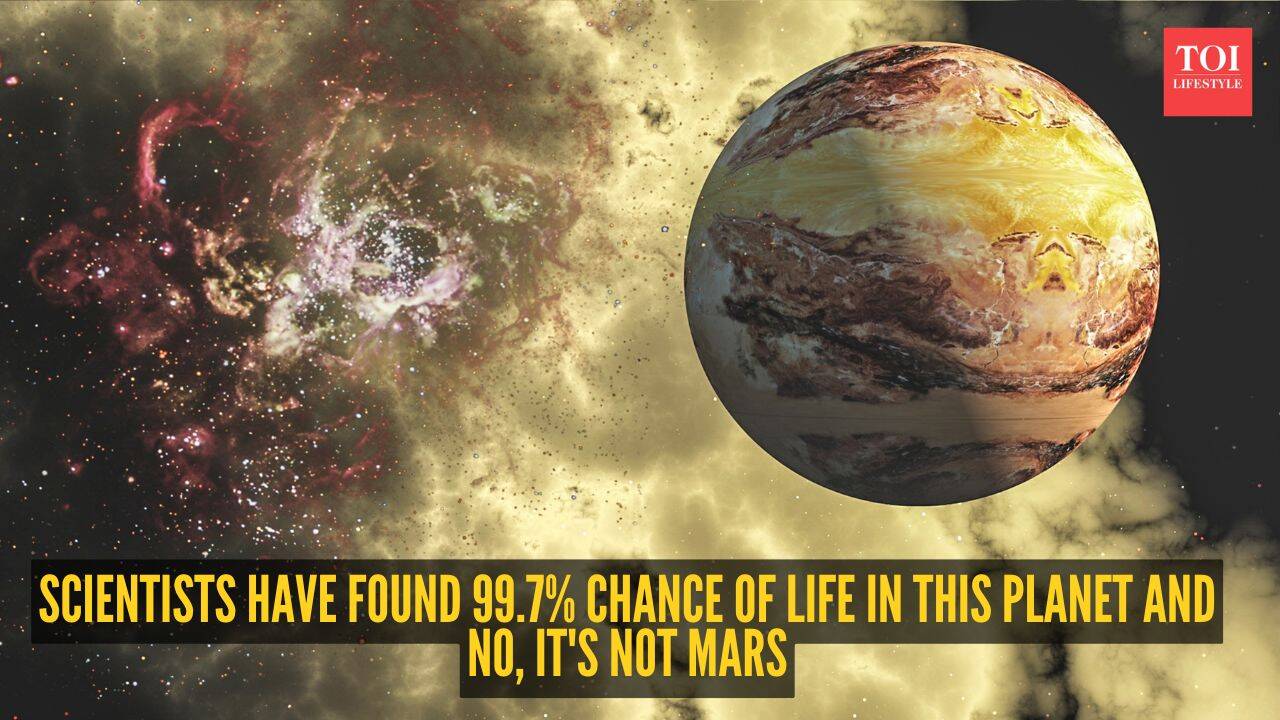
The age-old human inquiry into whether we are alone in the universe has received its most compelling and statistically significant hint yet, shifting the focus of potential extraterrestrial life far beyond the familiar red dust of Mars. Scientists utilizing the unparalleled capabilities of the James Webb Space Telescope (JWST) have detected intriguing atmospheric constituents on a distant exoplanet, K2-18b, suggesting a 99.7% probability of gases associated with biological processes on Earth. This groundbreaking revelation, while still requiring rigorous confirmation, positions K2-18b as perhaps the most promising candidate identified to date in the ongoing quest for life beyond our solar system, heralding a new frontier in astrobiology.
The centerpiece of this captivating discovery lies in the spectroscopic analysis of K2-18b’s atmosphere, which revealed the unmistakable presence of dimethyl sulfide (DMS) and, to a lesser extent, dimethyl disulfide (DMDS). On our home planet, these sulfur-containing compounds are almost exclusively produced by living organisms. Dimethyl sulfide, in particular, is a fundamental metabolic byproduct of various microbial life forms, most notably marine phytoplankton and some bacteria, playing a critical role in Earth's climate regulation by contributing to cloud formation. The detection of these specific molecules in an alien world's atmosphere, therefore, immediately raises the profound question of whether similar biological pathways are at work hundreds of light-years away.
Leading the research, Professor Nikku Madhusudhan articulated the profound implications of these findings, stating that this represents the most robust evidence accumulated thus far for the potential existence of life elsewhere. He expressed a realistic expectation that this signal could be confirmed with greater certainty within one to two years, pending further observations and analysis. What makes the K2-18b detection particularly striking is the estimated concentration of these gases; scientists calculate that the atmospheric abundance of DMS on this exoplanet is orders of magnitude higher—thousands of times greater—than what is observed in Earth's atmosphere. If this association with biological activity holds true, the implication is staggering: K2-18b might not just harbor life, but could be positively teeming with it, suggesting a planetary ecosystem rich in the microbial processes that generate these signature molecules.
The potential ramifications extend far beyond a single planet. As Professor Madhusudhan mused, a confirmed discovery of life on K2-18b would fundamentally alter our understanding of the cosmos, providing strong evidence that life is not an anomaly but potentially a common occurrence throughout the vast expanse of the galaxy. This hypothesis, often discussed in theoretical astrobiology, would shift from speculative philosophy to empirical observation, opening up entirely new avenues for research into universal biological principles and the diversity of life forms.
However, the scientific community, despite the palpable excitement, maintains a crucial degree of caution, a standard operating procedure essential to robust discovery. The reported confidence level of 99.7% for the DMS signal, while remarkably high and indicative of a very strong detection, does not yet meet the stringent 'five-sigma' threshold typically required for a definitive scientific claim. The five-sigma standard, which corresponds to a probability of roughly 99.99994% (or about a 1-in-3.5 million chance of a statistical fluke), represents the gold standard for confirmation in fields like particle physics and astronomy. The remaining 0.3% possibility, though small, means there's still a chance—a very slim one, but a chance nonetheless—that the observed signal is a statistical anomaly or an artifact of the data processing rather than a true astrophysical or biological phenomenon. This meticulous approach underscores the scientific commitment to irrefutable evidence before declaring such a monumental discovery.
This demand for higher certainty is not merely academic pedantry; it is rooted in the history of science, where intriguing signals have sometimes later been attributed to observational error or misinterpretation. Astronomers and astrobiologists are acutely aware of the extraordinary nature of claims regarding extraterrestrial life, and thus the burden of proof is exceptionally high. Achieving the five-sigma level would require additional, independent observations, potentially using different instruments or techniques, to ensure the robustness and reproducibility of the data. Furthermore, advanced atmospheric modeling will be crucial to rule out all conceivable non-biological origins for the detected gases under the unique conditions of K2-18b.
Even if the signal surpasses the five-sigma threshold, the presence of these gases would not automatically, unequivocally prove life. Scientists acknowledge that non-biological explanations, while currently unknown or difficult to conceive under Earth-like conditions, cannot be entirely discounted for an alien world. The universe is replete with unexpected phenomena, and the chemical processes occurring on exoplanets, especially those vastly different from our own, could potentially mimic biosignatures through abiotic pathways. As Professor Catherine Heymans of Edinburgh University, an independent astronomer Royal for Scotland, aptly articulated, 'On Earth it is produced by microorganisms in the ocean, but even with perfect data we can't say for sure that this is of a biological origin on an alien world because loads of strange things happen in the Universe and we don't know what other geological activity could be happening on this planet that might produce the molecules.' This sentiment highlights the inherent challenges of exoplanet characterization, where a complete understanding of planetary formation, interior dynamics, and atmospheric chemistry is still nascent.
The intriguing nature of K2-18b itself contributes to both the excitement and the scientific debate. Located approximately 124 light-years away in the constellation Leo, K2-18b is classified as a 'sub-Neptune' exoplanet. This designation refers to planets larger than Earth but smaller than Neptune, a class for which there is no direct analogue within our own solar system. This makes understanding their composition and potential habitability particularly challenging. Crucially, K2-18b orbits within its star's habitable zone, the region where temperatures are theoretically suitable for liquid water to exist on a planet's surface. The presence of liquid water is considered a cornerstone for life as we know it, making K2-18b a prime target in the ongoing hunt for alien organisms.
Adding another layer of complexity and potential habitability, K2-18b has been hypothesized to be a 'hycean world.' This theoretical class of planets is characterized by a thick, hydrogen-rich atmosphere enveloping a deep, global ocean of liquid water. Such a configuration would present a vastly different environment for life than a rocky, terrestrial planet like Earth. The energy sources, nutrient cycles, and types of organisms that might thrive in a hycean world could be unique, stretching our current biological paradigms. Earlier observations by the James Webb Space Telescope had already detected methane and carbon dioxide in K2-18b's atmosphere, further strengthening the case for its potential as a habitable environment and fueling interest in its classification as a hycean world. The full suite of observations, including the recent DMS and DMDS findings, appears most consistent with a world capable of supporting microbial life within a vast, subsurface ocean.
The interpretation of K2-18b's structure remains an active area of scientific discussion. While some researchers envision a colossal, deep ocean beneath its extensive hydrogen envelope, others propose alternative models. These include a 'molten-rock world,' where intense internal heat keeps the planet's interior in a liquid state, or even a 'mini gas giant,' lacking a distinct surface altogether. Each of these structural models would have profound implications for the planet's potential to host life. A molten-rock world, for instance, might be too extreme for sustained life, while a mini gas giant without a solid or liquid surface would present challenges for the very definition of a 'habitable zone' and the types of biosignatures we expect. This ongoing debate underscores that our understanding of both the atmospheric chemistry and the internal composition of this enigmatic exoplanet is still evolving.
The challenges in drawing definitive conclusions from these observations are substantial. Astronomers are attempting to discern extremely faint signals, often at the very limits of current instrument capabilities. The light from K2-18b's parent star, filtered through its distant atmosphere as the exoplanet transits, carries the subtle spectroscopic fingerprints of its chemical composition. Extracting and accurately interpreting these minuscule variations requires sophisticated data analysis techniques and a deep understanding of atmospheric physics and chemistry. The immense distance separating us from K2-18b, 124 light-years, further complicates this delicate process, making every photon collected a precious piece of the puzzle.
Moreover, the sheer diversity of chemical reactions possible in an alien atmosphere, combined with unknown geological or astrophysical processes, means that scientists must meticulously consider all plausible abiotic pathways for the formation of observed molecules. This necessitates the development of new theoretical models and experimental studies that can simulate the extreme conditions found on exoplanets, pushing the boundaries of our chemical and physical understanding. Without direct samples or probes, which remain futuristic propositions, our entire understanding rests on the interpretation of light—an incredibly powerful, yet indirect, investigative tool.
Beyond the specifics of K2-18b, the broader significance of these findings lies in what they represent for the field of astrobiology and astronomy as a whole. For the very first time in human history, humanity possesses the technological prowess, embodied by instruments like the James Webb Space Telescope, to systematically search for possible biosignatures on distant worlds. This capability marks a truly transformative moment, which many researchers are already hailing as the dawn of a new era in astrobiology. Previously, the search for extraterrestrial life was largely confined to speculative hypotheses, indirect inferences, or missions within our own solar system. Now, we are directly probing the atmospheres of exoplanets, seeking the chemical fingerprints of life itself.
This methodological leap signifies a shift from merely identifying potentially habitable planets to actively characterizing them for signs of biological activity. The meticulous work of analyzing light from exoplanet atmospheres, identifying specific molecules, and then rigorously evaluating their potential biological or abiotic origins, represents a scientific endeavor of unprecedented scope and ambition. It is precisely this profound methodological advance that has garnered such immense attention for the K2-18b results, even in their preliminary, unconfirmed state. The journey is as significant as the destination, demonstrating how far scientific instruments and analytical techniques have progressed in just a few decades.
In essence, the message emanating from the depths of space regarding K2-18b is one of immense promise, yet tempered by rigorous scientific protocol. This exoplanet has emerged as one of the most compelling and promising candidates in humanity's ongoing search for life beyond Earth. The evidence collected is undeniably intriguing, sparking a vital and serious debate within the scientific community about its interpretation. The coming months and years, with further observations from the James Webb Space Telescope and potentially other advanced instruments, will be absolutely crucial. These next few data points and analyses hold the potential to either solidify these findings into a historic breakthrough, fundamentally reshaping our cosmic perspective, or to relegate them to the category of another near-miss, a tantalizing but ultimately unconfirmed hint in the vastness of the universe. Regardless of the ultimate outcome, this investigation into K2-18b stands as a testament to humanity's unyielding curiosity and its relentless pursuit of answers to the most fundamental questions about life's place in the cosmos.
source: Times of India