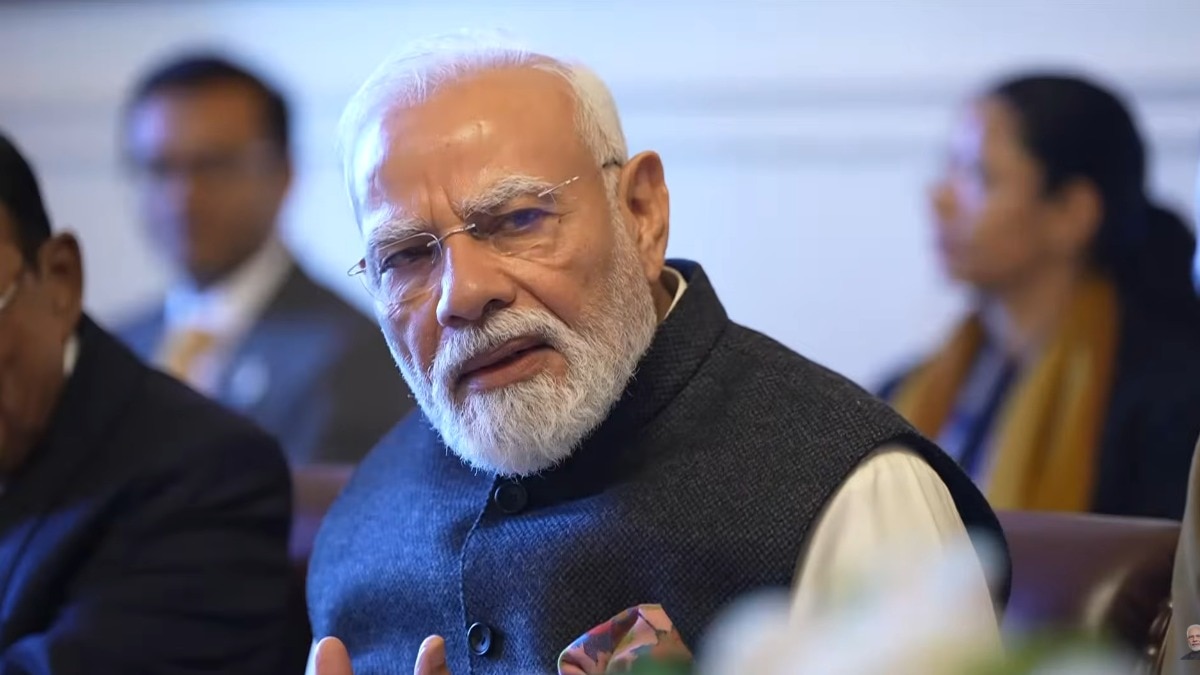
During a pivotal address at the Australia-India Annual Leaders’ Summit in Melbourne, Prime Minister Narendra Modi delivered a resounding endorsement of Australia's groundbreaking legislative initiative, which seeks to restrict access to major social media platforms for individuals under the age of 16. The Prime Minister's remarks emphasized that Australia’s proactive stance in navigating the complexities of the digital realm and its commitment to shielding its youngest citizens from potential online harms offer an invaluable blueprint for India and the global community at large. This commendation not only signals a burgeoning alignment in digital policy philosophies between the two nations but also underscores India’s keen interest in adopting robust measures to ensure a safer online environment for its vast youth population, a demographic increasingly susceptible to the multifaceted challenges posed by unfettered digital access. The discourse surrounding this topic is particularly timely, given the accelerating pace of digital adoption worldwide and the growing consensus among policymakers regarding the imperative of digital guardianship.
Prime Minister Modi articulated unequivocally that India is closely observing and actively 'learning a lot' from the legislative architecture and strategic methodologies being deployed by Australia. His statement illuminates a national intent to meticulously study and potentially adapt similar protective frameworks, aiming to cultivate an online ecosystem that prioritizes child safety without stifling digital innovation. The Australian approach, which mandates major digital platforms to implement stringent age verification protocols and effectively bar users below the age of 16 from creating accounts, represents a significant policy frontier. This bold move is a direct response to escalating concerns over cyberbullying, the pervasive spread of harmful content, and the documented adverse impacts of excessive social media exposure on adolescent mental health and developmental trajectories. The Prime Minister's recognition of Australia's pioneering spirit in this domain suggests a global shift towards greater accountability for technology companies and a re-evaluation of the societal responsibilities inherent in managing digital public squares.
Speaking before an esteemed assembly that included Australian Prime Minister Anthony Albanese and other senior dignitaries, Prime Minister Modi lauded Australia’s comprehensive regulatory philosophy concerning information technology and online safety. His appreciation extended particularly to the measures specifically tailored to insulate children from the more insidious aspects of social media engagement. “The meticulous manner in which you are enacting changes in laws pertaining to information technology and social media, and your dedicated efforts to safeguard society, serve as a profound inspiration to the world,” PM Modi stated, underscoring the transformative potential of such legislative foresight. He continued, “We are deriving extensive knowledge from your endeavors and extracting numerous critical lessons from their implementation.” These affirmations highlight a shared understanding of the profound societal implications of digital technology and a collective commitment to harness its benefits while mitigating its inherent risks, particularly for the most vulnerable segments of the population.
The Australian legislation, which is currently progressing through various stages of parliamentary consideration, is poised to establish one of the most rigorous regulatory frameworks for social media globally. Its core mandate is to compel leading digital platforms to proactively prevent individuals under the age of 16 from establishing accounts, thereby creating a de facto digital age gate. The impetus behind this legislative push is multifaceted, primarily driven by a deep concern for the escalating incidence of online harm, the corrosive effects of cyberbullying, and the increasingly well-documented detriments of social media saturation on the psychological well-being of children and young adults. The regulatory paradigm seeks to address these pressing issues by fostering a more controlled and protective online environment, compelling platforms to assume greater responsibility for the demographics they serve and the content they host. This proactive legislative posture by Australia is setting a precedent that is resonating far beyond its national borders, inviting other nations to re-evaluate their own approaches to digital governance and child protection.
The timing and substance of Prime Minister Modi’s remarks resonate with heightened significance, arriving at a juncture when calls for comparable digital restrictions are rapidly gaining traction within India itself. The burgeoning digital penetration across India, coupled with increasing public awareness regarding online safety issues, has spurred a domestic debate on the necessity of stronger regulatory oversight. Illustrative of this growing momentum, the Indian state of Karnataka has already taken preliminary steps towards implementing a social media access ban for children under 16, reflecting a localized initiative to tackle this pervasive challenge. Concurrently, Andhra Pradesh has indicated its serious consideration of introducing similar protective measures, suggesting a regional trend towards robust digital safeguarding. These developments within India underscore a broader national recognition of the urgency to protect young users in an increasingly interconnected digital world, indicating a potential harmonized legislative movement in the near future that could draw heavily from international best practices, including those being pioneered by Australia.
The challenges inherent in implementing such bans are considerable, particularly in a diverse and digitally expansive nation like India. Age verification mechanisms present a formidable technical and logistical hurdle. Ensuring accuracy and privacy compliance while verifying the age of hundreds of millions of internet users across varied socio-economic strata requires innovative solutions and robust technological infrastructure. Furthermore, regulating content flow and user engagement on platforms that operate globally necessitates intricate international cooperation and a nuanced understanding of digital ecosystems. India's unique digital landscape, characterized by high mobile penetration and a rapidly expanding user base, necessitates a carefully calibrated approach that balances protection with access, and regulation with innovation. The lessons from Australia, particularly regarding the collaboration between government, industry, and civil society in developing workable solutions, will be critical for India as it navigates this complex policy terrain. The discourse extends beyond mere technical implementation to encompass broader societal dialogues on digital literacy, parental guidance, and the role of educational institutions in fostering responsible online behavior from an early age.
Beyond the critical discussions on digital regulation, Prime Minister Modi also took the opportunity at the Melbourne event to underscore the pivotal role of younger generations in charting the future trajectory of India-Australia bilateral relations. He emphasized that the burgeoning interaction and deepening rapport between Indian and Australian youth were not merely strengthening diplomatic ties but were, in fact, forging a unique model with the potential for widespread positive global impact. This vision extends beyond traditional state-to-state engagements, recognizing the powerful, organic connections being forged at the grassroots level. “What is particularly heartening is the way our younger generations are growing together, fostering a sense of camaraderie and shared purpose. The genuine warmth, gracious welcome, and profound respect that Indian youth have experienced here in Australia is truly remarkable,” Modi remarked, highlighting the deep cultural appreciation that underpins these intergenerational exchanges. He elaborated, “The collective coming together and sustained growth of the youth from our two sovereign nations is rapidly evolving into a significant global laboratory for the world, one that holds the immense potential to positively influence the entire course of this present century.”
This 'laboratory' concept speaks to the potential for India and Australia, through their youth, to demonstrate how diverse cultures and economies can converge to address global challenges, fostering innovation, mutual understanding, and shared prosperity. It encompasses student exchange programs, collaborative research initiatives, cultural festivals, and professional development opportunities that bridge geographical and cultural divides. The long-term implications of such robust youth engagement are profound, building a foundation of goodwill and shared values that will sustain and deepen the bilateral relationship for decades to come. The emphasis on youth also implicitly acknowledges the digital natives who are shaping the future, making the earlier discussion on digital safety even more pertinent. Ensuring their well-being and responsible development in the digital sphere is not just a national imperative but a global one, particularly as these young individuals become ambassadors of their respective nations and drivers of future international collaborations.
The Prime Minister further reinforced the enduring strength and strategic depth of the bilateral ties between India and Australia by invoking a popular and evocative analogy, one frequently employed within Indian discourse to illustrate the power of synergy and collective action. “As you very aptly articulated, when one is simply added to one, the arithmetic result is two. However, when one stands resolutely alongside another, their combined force becomes eleven,” Modi declared, punctuating his statement with a powerful metaphorical flourish. He elaborated on this profound sentiment: “In the most authentic sense, today India and Australia are standing together, shoulder to shoulder. Consequently, one positioned next to one is not merely yielding a sum of two; rather, one next to one is transcendently becoming eleven.” This assertion, which garnered enthusiastic applause from the assembled audience, eloquently encapsulates the profound belief in the exponential power generated when two nations with shared values and strategic interests align their efforts and amplify their collective impact on the global stage. It represents a paradigm shift from additive cooperation to multiplicative synergy, suggesting a partnership where the whole is significantly greater than the sum of its parts.
The 'one plus one equals eleven' analogy is not just a rhetorical device; it is a strategic declaration. It signifies a partnership that is not merely transactional but transformational, aiming for outcomes that neither nation could achieve in isolation. This principle underpins the expanding cooperation across a multitude of critical sectors. Prime Minister Modi elucidated that the India-Australia partnership is entering an unprecedented new phase, characterized by dynamically expanding cooperation across an increasingly diverse array of domains. This includes enhanced collaboration in traditional areas such as trade and defence, alongside burgeoning partnerships in cutting-edge fields like technology, space exploration, and critical maritime security. The deepening of trade ties, for instance, seeks to leverage the complementary strengths of both economies, fostering robust supply chains and facilitating greater market access for goods and services. In defence, the focus is on shared security interests in the Indo-Pacific, joint military exercises, and intelligence sharing, all aimed at maintaining regional stability and a free and open international order.
Moreover, the technological collaboration extends to areas of artificial intelligence, cybersecurity, quantum computing, and renewable energy, recognizing that these are the frontiers of future economic growth and geopolitical influence. Space cooperation, too, is gaining traction, with opportunities for joint satellite missions, data sharing, and the development of space-based applications for societal benefit. Maritime security, particularly in the context of the Indo-Pacific, is a paramount concern for both nations, involving collaborative efforts to counter piracy, safeguard vital sea lanes, and promote adherence to international law. These multifaceted engagements are underpinned by a shared commitment to democratic values, multilateralism, and a rules-based international order, providing a stable foundation for the partnership’s continued expansion and deepened strategic alignment. The convergence of interests across these domains reflects a mature and forward-looking alliance, one that is strategically poised to navigate the complex geopolitical landscape of the 21st century.
The Prime Minister further asserted that the unique positioning of the India-Australia partnership is singularly conducive to contributing significantly to global progress. This distinct advantage, he explained, stems directly from the profound similarities that exist between the two societies, encompassing shared democratic traditions, cultural pluralism, and an unwavering commitment to fundamental freedoms. These intrinsic commonalities foster an environment of trust and mutual understanding, which are essential for effective collaboration on complex global issues. Modi specifically highlighted that emerging domains, such as the ever-evolving field of maritime security and the increasingly critical realm of outer space, offer particularly significant and fertile opportunities for intensified collaboration. These areas are not just about national interests but also about contributing to global commons, ensuring secure passage for international trade and responsible utilization of outer space for the benefit of all humanity. The strategic confluence of shared values, complementary economic interests, and a collective vision for a stable and prosperous Indo-Pacific region positions India and Australia as indispensable partners in shaping the global future, demonstrating how bilateral strength can translate into multilateral benefit. This comprehensive partnership, fortified by shared principles and a pragmatic approach to modern challenges, stands as a testament to the power of international cooperation in an increasingly interconnected and complex world.
source: India Today