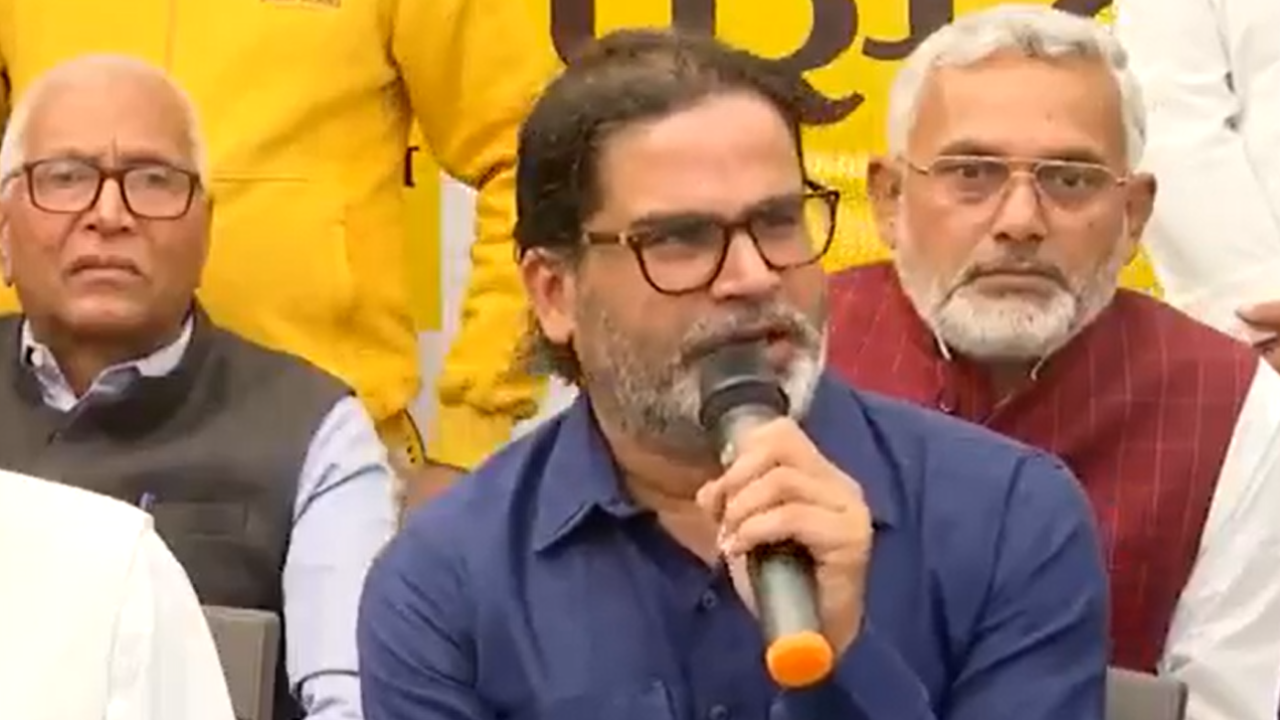
In a dramatic and highly scrutinized strategic pivot, veteran political strategist Prashant Kishor has formally embarked on his direct electoral journey, choosing the formidable Bankipur Assembly constituency in Bihar for his debut. This decision, announced amidst considerable anticipation, marks a significant departure from the conventional wisdom that dictates political newcomers seek out 'safe seats' for their initial foray into parliamentary politics. Kishor, the architect behind the 'Jan Suraaj' movement, has consciously positioned himself against the political tide, deliberately selecting a constituency long considered an impregnable fortress for the Bharatiya Janata Party (BJP).
Kishor’s rationale for this unconventional choice is deeply rooted in his stated mission to fundamentally alter the electoral landscape of Bihar. He articulated that his primary objective was never to secure an easy victory but rather to use the platform of the Bankipur by-election to broadcast a profound message to the electorate: that Bihar’s progress hinges on transcending the entrenched divisions of caste and religion in the ballot box. This philosophical stance represents a direct challenge to decades of identity-based politics that have largely defined electoral outcomes in the state, often perpetuating cycles of poverty and underdevelopment.
His entry into the Bankipur fray is thus not merely about winning a single seat, but about catalyzing a broader paradigm shift in voter behavior. Kishor elaborated on this, explaining that while most political aspirants prioritize electoral security, he is deliberately doing the opposite. He asserted that for Bihar to truly evolve, its citizens must liberate themselves from the electoral anxieties that compel them to vote along pre-determined lines – whether it’s voting for the BJP out of apprehension towards the Rashtriya Janata Dal (RJD) or vice-versa. By contesting from a constituency where identity politics, according to him, should hold no sway, he aims to personify the very principle he advocates.
The choice of Bankipur is replete with symbolism and strategic implications. Situated within the Patna Sahib Lok Sabha constituency, Bankipur has been an unwavering BJP stronghold for an extended period, reflecting the party's deep-rooted influence, particularly in urban segments of Bihar. The seat has consistently elected BJP representatives, notably Nitin Nabin since 2010, who inherited the political legacy from his father, Nabin Kishore Prasad Sinha. This historical dominance has solidified Bankipur’s reputation as one of the BJP's most reliable urban bastions, making Kishor's challenge all the more audacious.
Kishor’s campaign, while centered on his broader message of transcending identity politics, also sharply critiques the incumbent party’s perceived complacency. He pointedly accused Nitin Nabin of neglecting his constituents after ascending to the position of BJP’s national president and subsequently securing a seat in the Rajya Sabha, the upper house of India's Parliament. Kishor argued that Nabin's move reflected a disregard for the very electorate that had repeatedly reposed faith in him, painting it as an abandonment of local responsibilities for national political advancement.
The former election strategist meticulously dismantled the BJP's implicit defense that Nabin’s resignation from the Assembly was a natural consequence of his elevation to a national party role. Kishor invoked the compelling example of Union Home Minister Amit Shah, who, he reminded, continued to serve as a Member of the Legislative Assembly in Gujarat even after assuming the BJP’s national presidency. This comparison served to underscore Kishor’s contention that Nabin’s departure was a matter of choice, not compulsion, further fueling his narrative of the BJP taking its loyal voters for granted.
Crucially, Kishor clarified that his electoral battle in Bankipur transcended the individual actions of Nitin Nabin. While Nabin’s exit provided an immediate context, Kishor asserted that his true objective was to confront the BJP’s perceived arrogance and dominance in the state, particularly under the leadership of Chief Minister Samrat Choudhary. He declared that a victory for his Jan Suraaj Party would serve as a vital lesson to an administration that he characterizes as increasingly out of touch and overconfident.
This sentiment was vividly encapsulated in Kishor’s scathing remarks regarding certain BJP leaders who, he alleged, openly boast that
source: Times of India