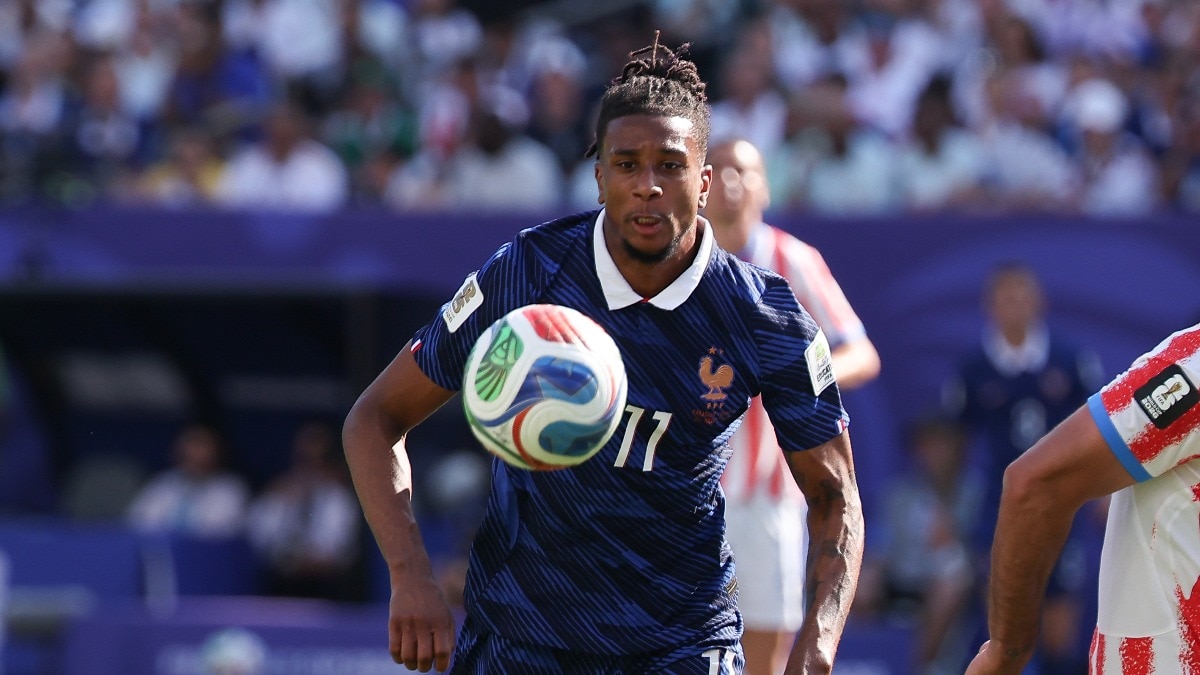
In a decision that sends ripples through the French national team camp and ignites broader discussions about the impartiality of global football governance, FIFA's disciplinary committee has formally rejected the appeal lodged by the French Football Federation (FFF) to overturn the yellow card issued to star attacker Michael Olise. The verdict, confirmed by head coach Didier Deschamps, casts a significant shadow over Les Bleus' preparations for their highly anticipated FIFA World Cup 2026 quarter-final clash against a formidable Moroccan squad. Olise now finds himself treading a perilous disciplinary tightrope, a single booking away from an automatic suspension that could sideline him from a potential semi-final fixture.
Coach Deschamps addressed the media with a palpable air of resignation, stating unequivocally, "There was no change when it comes to Olise's yellow card. We received FIFA's decision this morning that the yellow card was maintained." This confirmation extinguished any lingering hopes within the French contingent that the governing body might reconsider the caution, which was widely perceived as harsh and disproportionate given the circumstances of the incident during France's hard-fought Round of 16 victory over Paraguay.
The incident in question occurred deep into stoppage time, specifically in the 97th minute of the match, as France was battling to preserve their slender 1-0 lead. Olise was involved in a late altercation with Paraguayan midfielder Matas Galarza. Video replays of the contact strongly suggested that Olise's action amounted to little more than a momentary grasp of Galarza's jersey, a common entanglement in the dying moments of a tense encounter. However, Galarza dramatically went to ground, clutching his face in a manner that many observers, including French team officials, believed to be an embellishment. Despite the visual evidence casting doubt on the severity – or even the legitimacy – of the foul claimed by the Paraguayan, the on-field referee produced a yellow card for Olise. The FFF's subsequent review of the footage led them to believe there were sufficient grounds for an appeal, citing a clear lack of violent conduct or significant impediment to play. Their submission to FIFA was based on the premise that the referee’s initial decision constituted a clear and obvious error, a standard typically required for disciplinary reversals. Yet, FIFA's disciplinary panel ultimately chose to uphold the original ruling, a move that has been met with quiet frustration and bewilderment in the French camp.
The ramifications of this decision for Deschamps' tactical blueprint are profound. Olise, a dynamic and influential presence on the wing, brings a unique blend of pace, dribbling prowess, and goal-scoring threat to the French attack. His ability to unlock stubborn defenses, create chances from wide areas, and contribute to both buildup and finishing phases makes him an invaluable asset. Now, with the weight of potential suspension hanging over him, Deschamps must weigh the risk of fielding a player who cannot afford to commit even a minor infraction. This situation forces an agonizing choice: either instruct Olise to play with extreme caution, potentially dampening his natural attacking instincts and reducing his effectiveness, or risk losing him for a crucial subsequent fixture. The latter scenario would be particularly devastating, as a semi-final without Olise against a top-tier opponent like Spain or Belgium could significantly diminish France's chances of progressing to the final.
Moreover, Olise is not the sole French player facing this precarious situation. Teammates Bradley Barcola and Manu Koné also received cautions during the bruising encounter with Paraguay and are now similarly on a disciplinary tightrope. This collective vulnerability adds another layer of complexity to Deschamps' team selection and in-game management. He must ensure that his key players remain disciplined while simultaneously performing at the elite level required for World Cup knockout football. The pressure to avoid bookings while maintaining aggressive play is immense, especially against a Morocco side renowned for its tactical discipline, physical intensity, and robust defending.
However, the disappointment and concern within the French camp are amplified by a dramatic and highly controversial precedent set earlier in the tournament: the extraordinary reversal of a red card issued to United States striker Folarin Balogun. Balogun had received a straight red card for a challenge during the Americans' victory over Bosnia and Herzegovina, a decision that carried with it an automatic one-match suspension, typically an unassailable disciplinary outcome. What followed, however, was an unprecedented display of political lobbying that sent shockwaves through the football world.
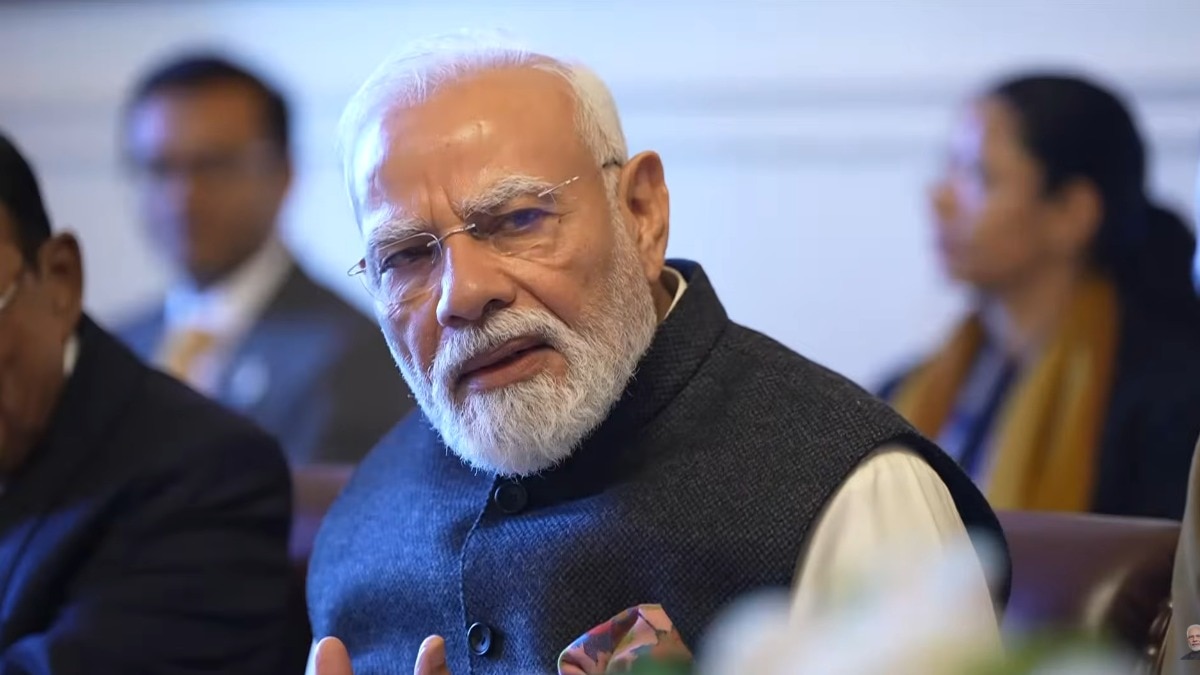
Reports indicate that the United States Football Federation engaged in an aggressive campaign to appeal Balogun's red card, a campaign that allegedly culminated in direct, high-level political intervention. Specifically, it was widely reported that then-US President Donald Trump made three personal phone calls to FIFA President Gianni Infantino. Such direct and overt political interference by a head of state in the disciplinary affairs of a major international sporting event was, to many, an astonishing departure from established protocols and norms of sporting integrity. The very notion that a world leader could directly appeal to the head of football’s global governing body to influence a judicial decision on a player’s sanction was seen as crossing a fundamental ethical line.
Following this unprecedented lobbying, FIFA took the extraordinary step of suspending Balogun's ban, clearing him to participate in the USA's subsequent Round of 16 tie against Belgium. This decision was met with immediate and fierce condemnation from various quarters. UEFA, European football's governing body, expressed profound dismay, with officials privately and publicly voicing concerns about the integrity of the tournament and the erosion of fair play principles. The Belgian FA, the United States' opponents in the immediate subsequent round, were particularly vocal in their outrage, accusing FIFA of establishing a dangerous precedent and of crossing a "red line" regarding the competitive balance and impartiality of the tournament. Critics argued that the decision set a perilous precedent, suggesting that disciplinary outcomes could be swayed not by sporting merit or clear evidence, but by geopolitical influence and the sheer weight of power, thereby undermining the very foundation of fair competition.
The contrast between the two cases — Olise's yellow card and Balogun's red card — could not be starker, and it undoubtedly fuelled the French Football Federation's belief that their appeal for Olise held genuine administrative and sporting merit. In Olise's situation, the FFF presented clear video evidence that appeared to exonerate their player from any malicious intent or significant foul. The perceived injustice was rooted in the objective interpretation of on-field events. Conversely, Balogun's red card involved a challenge that, while debatable in its severity, was a more subjective call of the referee concerning dangerous play, and the subsequent reversal was reportedly precipitated by direct political pressure rather than a dispassionate review of incontrovertible evidence.
French team officials consistently maintained that their appeal regarding Olise was entirely independent and not a direct reaction to the American intervention. Nonetheless, it is undeniable that the Balogun precedent created an environment where the FFF might have reasonably hoped for similar flexibility from FIFA, especially given the seemingly clear video evidence in Olise's favour. The perceived inconsistency in FIFA's application of its disciplinary mandates has sparked a wider debate among pundits, former players, and fans alike regarding the transparency, consistency, and integrity of the governing body's decision-making processes. Questions abound: Are all appeals treated equally? What criteria truly govern the overturning of a referee's on-field decision? And is FIFA susceptible to external pressures that compromise its role as an impartial arbiter of the game?
Ultimately, the governing body showed no inclination to extend the same flexibility or leniency to the French delegation. This differential treatment, regardless of the official explanations, serves to reinforce perceptions of a two-tiered system of justice, where influence and power might play a more significant role than objective evidence or established disciplinary procedures. For France, the immediate focus must remain on the pitch, but the undercurrent of frustration over FIFA's perceived inconsistency is unlikely to dissipate quickly.
From a purely sporting perspective, the implications for Didier Deschamps are indeed significant. Olise's presence is vital for France, a team that relies heavily on its attacking prowess and individual brilliance to break down opponents. As a dynamic winger, Olise provides crucial width, the ability to take on defenders in one-on-one situations, and a keen eye for a pass or shot. His partnership with other key forwards has been a cornerstone of France's offensive strategy throughout the tournament. Should he be forced to play cautiously, or worse, be suspended for a future match, Deschamps would be compelled to re-evaluate his attacking schemes, potentially relying on less experienced or stylistically different alternatives, which could disrupt team chemistry and tactical rhythm at a critical juncture of the competition.
The quarter-final encounter against Morocco presents a unique challenge. Morocco has emerged as one of the tournament's most resilient and tactically astute teams, boasting a formidable defensive record and a potent counter-attacking threat. Their disciplined defensive block and ability to frustrate opposition attacks means France will need all their creative attacking options firing on all cylinders. The prospect of Olise playing with the fear of suspension, or of his eventual absence, could significantly impact France's ability to unlock Morocco's stoic defense. Furthermore, Morocco's physical style of play and their willingness to engage in robust challenges mean that the match itself could be prone to disciplinary incidents, further intensifying the pressure on Olise, Barcola, and Koné to maintain immaculate discipline.
Looking beyond the immediate tournament, this episode highlights fundamental challenges in football governance. The consistency of disciplinary rulings, the independence of appeal processes, and the perceived susceptibility of governing bodies to external influence are critical issues that demand greater transparency and accountability. The application of VAR has added another layer of complexity, with debates ongoing about its role in correcting
source: India Today