The global football community finds itself embroiled in a fresh wave of controversy and scrutiny directed at its governing body, FIFA, following a highly unusual and contentious decision to reverse a crucial World Cup red card suspension. At the heart of this unfolding drama lies the United States international Folarin Balogun, whose automatic one-match ban was inexplicably lifted just ahead of his nation's pivotal Round of 16 clash against Belgium. This unprecedented move has not only ignited fierce debate among fans, pundits, and participating nations but has also drawn a scathing critique from a figure intimately familiar with the corridors of power within world football: former FIFA President Joseph 'Sepp' Blatter.
Blatter, who presided over FIFA for 17 years from 1998 to 2015, took to social media to express his profound concern, delivering a pointed warning that the sport must rigorously guard against becoming a 'playground for political power.' His intervention adds a layer of historical context and gravitas to an already explosive situation, suggesting that the integrity of football's disciplinary process may have been compromised by external, non-sporting forces. Reports circulating widely indicate that the decision to reinstate Balogun was made after a direct appeal from U.S. President Donald Trump to the incumbent FIFA President, Gianni Infantino, to review the red card incident. Such an alleged high-level political intervention, if confirmed, would represent a startling deviation from established protocols and a significant challenge to the autonomy of sporting adjudication.
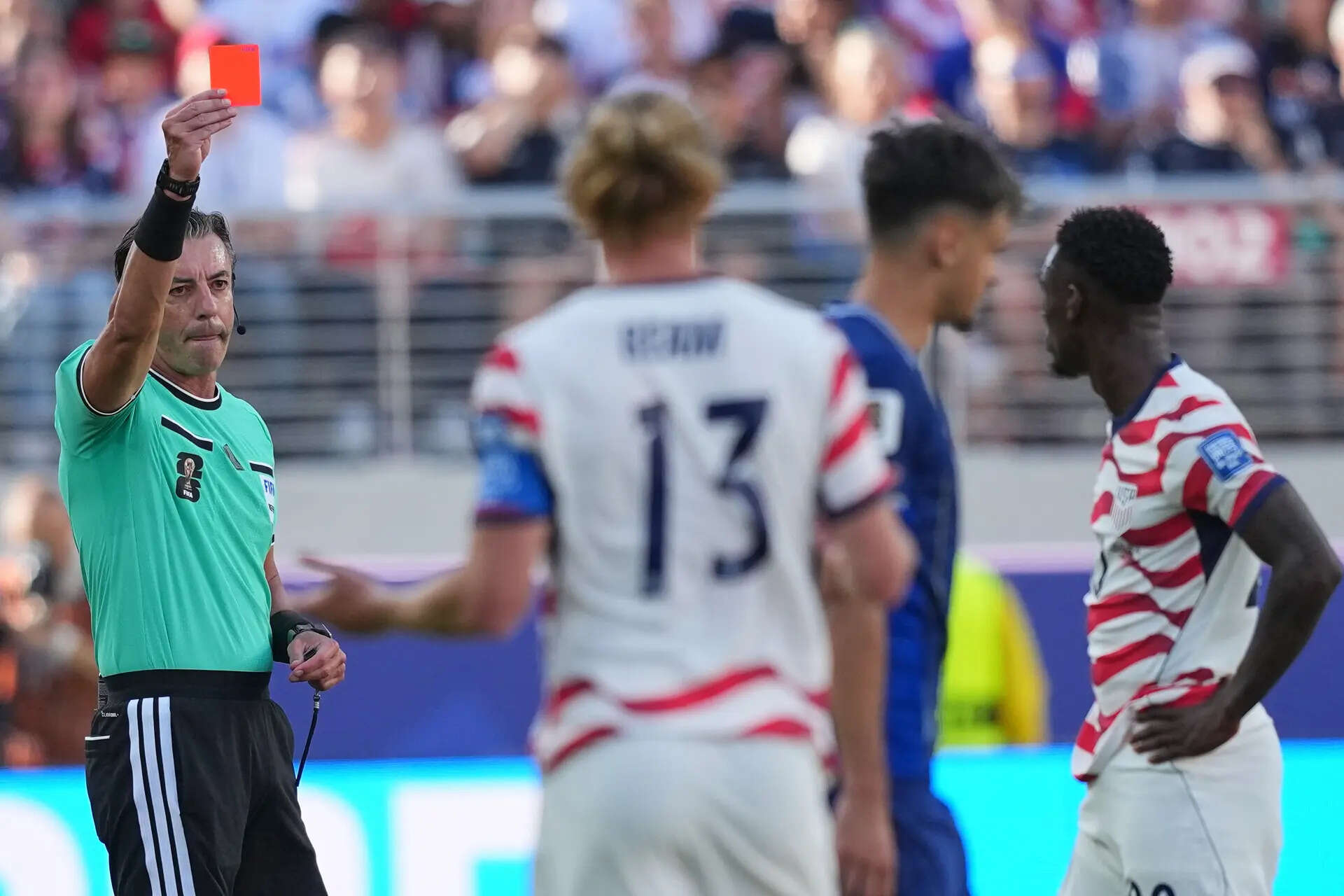
The sequence of events leading to this controversy began during the United States' Round of 32 fixture against Bosnia and Herzegovina. The Americans secured a comfortable 2-0 victory, but the win was overshadowed by Balogun's dismissal in the 73rd minute. Balogun, a dynamic forward, was shown a straight red card following a Video Assistant Referee (VAR) review after an unfortunate challenge on Bosnian player Tarik Muharemović. The incident saw Balogun's foot make contact with Muharemović's ankle, a dangerous tackle that, while perhaps not malicious, was deemed by Brazilian referee Raphael Claus to warrant the ultimate sanction. The immediate consequence of a direct red card in a World Cup fixture is an automatic one-match suspension, designed to ensure fairness and uphold the disciplinary standards of the tournament.
For the remainder of that match, the United States had to contend with playing a man down, a significant disadvantage that tested their resilience and tactical discipline. While they ultimately held on for the win, the expectation was clear: Balogun would be unavailable for their next knockout stage encounter. Coaches and players typically plan their strategies meticulously, taking into account player availability, suspensions, and potential replacements. The automatic ban meant that U.S. head coach Mauricio Pochettino would have to recalibrate his offensive plans and rely on alternative personnel for the crucial Round of 16 match against a formidable Belgian side. This preparation, however, was dramatically upended by FIFA's subsequent announcement.
On Sunday, just days before the highly anticipated USA versus Belgium clash, FIFA delivered a shockwave throughout the football world: Folarin Balogun's suspension had been officially lifted. The governing body stated that the decision was made under Article 27 of its disciplinary rules. This particular article grants FIFA considerable discretionary power to review and, in exceptional circumstances, modify disciplinary sanctions. Instead of serving an immediate ban, Balogun's suspension was converted into a one-year probationary period. This means that if he commits a similar offence within the next 12 months, the original one-match ban will be reactivated, in addition to any new disciplinary actions that might be imposed. The application of Article 27 in such a high-stakes, immediate context, especially concerning an automatic red card suspension in a World Cup knockout stage, is widely regarded as extraordinarily rare and highly irregular.
The timing and nature of this reversal immediately raised eyebrows. Disciplinary processes in major tournaments are generally considered sacrosanct, designed to be independent of external influence to ensure fair play and maintain the integrity of the competition. The idea that a red card, confirmed by a VAR review, could be overturned on the eve of a knockout match sent ripples of concern across the globe. Adding fuel to this fire were the numerous reports detailing the alleged involvement of U.S. President Donald Trump, who reportedly reached out directly to FIFA President Gianni Infantino. These reports claimed that President Trump personally requested a review of the red card, perceiving Balogun's dismissal as a 'great injustice.' His public commendation of FIFA following the reversal only served to reinforce these suspicions, intertwining the sporting decision with overt political maneuvering.
Joseph 'Sepp' Blatter's commentary on this episode carries particular weight, not only due to his extensive history at the helm of world football but also in light of his own controversial tenure, which saw numerous allegations and investigations into corruption and governance issues within FIFA. His insider perspective lends a critical eye to the current events, making his warnings all the more poignant. Through his remarks on X, Blatter unequivocally stated: 'Red cards are not overturned by political phone calls. They are overturned by rules, evidence and independent bodies.' This direct assertion challenges the narrative that the reversal was a purely procedural matter, instead pointing an accusing finger at potential undue influence. His rhetorical question, 'Quo vadis, FIFA?' ('Where are you going, FIFA?'), encapsulates a profound concern for the future direction and moral compass of the organization he once led.
Blatter's central message resonated deeply with many observers: 'Football must never become a playground for political power.' This statement speaks to a fundamental principle of sport – that competitions should be decided on the field of play, under universally applied rules, free from external pressures. The independence of football's disciplinary process is a cornerstone of this principle, ensuring that decisions are made based on objective evidence and established regulations, rather than the leverage or persuasion of powerful individuals or nations. The former president's strong words highlight the precarious balance FIFA must maintain between its global responsibilities and the potential for political entities to exert influence over its operations, particularly when national pride and high-stakes international competitions are involved.
The fallout from FIFA's decision was immediate and vociferous, particularly from the Belgian camp, who were Balogun's designated opponents. The Royal Belgian Football Association swiftly issued a statement expressing its 'astonishment' at the ruling. They further confirmed that they were actively 'exploring all available options' to protect the integrity of the competition, indicating a deep level of dissatisfaction and a potential legal challenge or formal complaint. For a team preparing for a World Cup knockout match, player availability is a critical factor in tactical planning. The sudden reinstatement of a key offensive player like Balogun could be seen as an unfair disruption to their preparations, forcing a last-minute adjustment in their defensive strategy against an opponent they believed would be without a significant threat.
Belgium's head coach, Rudi Garcia, echoed these sentiments, describing the decision as 'unprecedented in World Cup history.' His criticism went beyond the immediate tactical disadvantage, questioning the broader message it sent about the tournament's disciplinary process. Garcia's remarks suggested that such a ruling undermines the credibility and impartiality of FIFA's adjudication, potentially setting a dangerous precedent for future tournaments. The idea that disciplinary decisions, once made, could be subject to such external pressure and subsequent reversal, erodes confidence in the fairness and integrity that are supposed to define the pinnacle of international football.
Conversely, the U.S. contingent welcomed FIFA's ruling with understandable relief and satisfaction. Head coach Mauricio Pochettino publicly endorsed the decision, maintaining that Balogun's original dismissal had been unfair. He argued that his side had already suffered sufficient punishment by being forced to play with 10 men for a significant portion of their Round of 32 match against Bosnia and Herzegovina. From the U.S. perspective, the reversal rectified what they perceived as an erroneous initial call, allowing them to field their full strength for the crucial Round of 16 tie. This clash of interpretations highlights the subjective nature of football decisions and how they can be viewed through different lenses, especially when national interests are at stake.
The controversy has undeniably become one of the most significant talking points of the entire tournament, eclipsing discussions about on-field performances and tactical brilliance. It shifts the spotlight from athletic prowess to governance and ethics, forcing a critical examination of FIFA's operational independence. Blatter's remarks, steeped in his long and often tumultuous history with the organization, have added an additional layer of scrutiny, pushing the debate beyond mere sporting disagreement into the realm of global sports politics and the fundamental principles of fair play. The incident forces a reflection on how modern football, with its immense global reach, commercial interests, and political implications, navigates the complex interplay of power, rules, and integrity.
This particular episode illuminates the inherent fragility of disciplinary processes in high-stakes environments. While VAR was introduced to minimize human error and ensure greater justice in officiating, it appears that even technology-assisted decisions can become subject to review, or even reversal, under exceptional and politically charged circumstances. The implications for player conduct, referee authority, and the perceived sanctity of the rules are profound. If a red card, issued after careful review, can be overturned due to perceived political influence, it raises serious questions about the consistency and enforceability of disciplinary actions across all levels of the game.
The concept of 'probation' in place of an immediate ban is not entirely unheard of in football disciplinary codes, often applied in cases involving minor infractions or as part of a settlement. However, its application to an automatic suspension resulting from a direct red card in a World Cup knockout phase is virtually unprecedented. This specific application of Article 27 will undoubtedly be scrutinized for its potential to create a precedent, wherein future high-profile players or politically connected nations might seek similar interventions. Such a development would fundamentally undermine the principle that all teams and players are subject to the same rules, regardless of their geopolitical backing or individual prominence.
The saga also rekindles long-standing concerns about FIFA's governance structure and its susceptibility to external pressures. Throughout its history, the organization has faced accusations of lacking transparency and accountability, particularly concerning its decision-making processes. This latest incident, irrespective of its ultimate justification by FIFA, will undoubtedly fuel these existing narratives. For a global body entrusted with safeguarding the integrity of the world's most popular sport, maintaining absolute independence from political and commercial interests is paramount. Any perception of compromise in this regard can inflict significant damage on its credibility and the trust placed in it by member associations, players, and billions of fans worldwide.
Ultimately, the Balogun red card reversal has transcended a mere sporting controversy. It has evolved into a critical litmus test for FIFA's commitment to its stated values of fair play, integrity, and independence. The reactions from figures like Sepp Blatter, coupled with the outrage from affected nations like Belgium, underscore the deep-seated anxieties within the football community about the potential for political influence to warp the very essence of the beautiful game. As the World Cup progresses, all eyes will not only be on the dazzling displays of athleticism but also on how FIFA handles the lingering questions surrounding this contentious decision and its long-term implications for the governance of international football.
source: Times of India