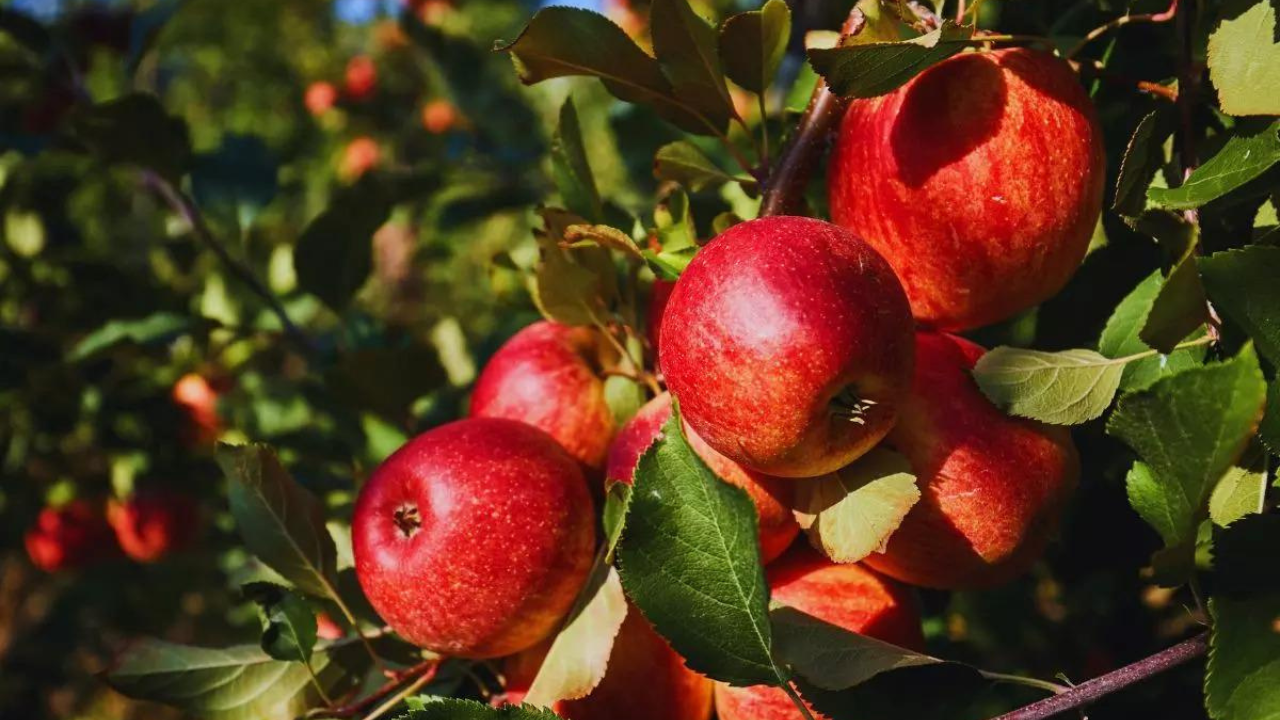
The verdant slopes of Himachal Pradesh, traditionally renowned for their bountiful apple orchards, are currently grappling with an alarming crisis as the state's robust Rs 5,000 crore apple economy faces an existential threat from intensifying climate pressures. A confluence of unpredictable weather patterns, including significantly reduced winter snowfall, unseasonal spring rains, devastating hailstorms, and erratic temperature fluctuations, is poised to trigger a dramatic decline in apple production this year, estimated at a staggering 40%. This sharp contraction not only threatens the economic stability of a region heavily reliant on horticulture but also casts a long, unsettling shadow over the livelihoods of approximately 2.5 lakh families directly or indirectly associated with apple cultivation across eight key districts.
Official projections paint a stark picture: the state's apple output, which stood at a healthy 6.99 lakh metric tonnes in the previous year (2025), is anticipated to plummet to around 4.36 lakh metric tonnes in the current year (2026). This represents a formidable reduction of approximately 2.63 lakh metric tonnes, translating to an estimated loss of 2.15 crore boxes of apples, a volume that underscores the profound economic shock reverberating through the region. This isn't merely a statistical anomaly; it is a direct consequence of a rapidly changing climate, challenging the very foundations of traditional agricultural practices that have sustained the Himalayan state for generations.
The intricate ballet of nature required for a successful apple harvest is exquisitely sensitive to climatic conditions. Apple trees, particularly the traditional varieties prevalent in Himachal Pradesh, necessitate a specific period of 'chilling hours' during winter—extended durations where temperatures consistently remain below 7 degrees Celsius. These chilling hours are crucial for breaking dormancy, ensuring uniform bud burst, robust flowering, and ultimately, a healthy fruit set. Reports from the horticulture department indicate a severe deficit in this vital winter snowfall, a primary source of chilling for the trees and a critical component of soil moisture recharge for the spring. Without adequate chilling, trees exhibit irregular flowering, reduced fruit setting, and often produce smaller, inferior quality fruit, severely impacting both yield and market value.
Further exacerbating the situation, the region has experienced untimely spring rains and a surge in devastating hailstorms. While rain is generally beneficial, its timing is paramount. Rains during the crucial flowering and pollination period can wash away pollen, deter pollinating insects, and lead to poor fruit set. Hailstorms, on the other hand, inflict direct physical damage to developing fruit, rendering them unsalable or significantly reducing their grade, leading to substantial post-harvest losses. Orchardists recount tales of entire crops being decimated within minutes by sudden, violent hailstorms, leaving behind a trail of shattered hopes and economic despair.
Fluctuating temperatures throughout the growing season add another layer of complexity. Sudden dips can cause cold shock, while premature rises can accelerate physiological processes, disrupting the natural growth cycle of the apple. Experts note that even a marginal increase in ambient temperatures, estimated at 1 to 1.5 degrees Celsius over recent years, significantly diminishes the accumulation of necessary chilling hours, pushing traditional apple belts to higher altitudes where conditions remain marginally cooler. This upward migration of apple cultivation zones is not only geographically limiting but also introduces new logistical and infrastructural challenges for growers.
The economic impact of this production shortfall is multifaceted and far-reaching. The Rs 5,000 crore valuation of Himachal Pradesh's apple economy underscores its pivotal role in the state's GDP and rural employment. A 40% reduction in output translates into billions of rupees in lost revenue for growers, cold storage operators, transporters, packaging material suppliers, and numerous other allied industries. The ripple effect extends beyond the direct stakeholders, impacting local markets, agricultural labor, and the overall purchasing power within rural communities, potentially slowing regional economic growth and exacerbating poverty in already vulnerable areas.
For the approximately 2.5 lakh families whose livelihoods are intertwined with apple farming, the current crisis is a profound personal calamity. Many are small and marginal farmers, with limited landholdings and even more limited access to capital. For them, a bad harvest year can mean the difference between solvency and crippling debt. The financial strain is compounded by steadily rising cultivation costs. Growers report significant increases in the prices of essential agricultural inputs, including pesticides, fungicides, fertilizers, and even the machinery required for orchard management. These escalating operational expenses, coupled with dwindling yields, are squeezing profit margins to unsustainable levels, making it increasingly difficult for farmers to maintain their orchards, let alone invest in necessary upgrades or climate-resilient practices.
The dependence on rain-fed agriculture is a critical vulnerability highlighted by the current crisis. Many apple orchards in Himachal Pradesh lack adequate irrigation facilities, leaving farmers entirely at the mercy of capricious weather patterns. As one seasoned orchardist, Balwant Justa, lamented, “The apple production this year has declined due to unfavourable weather conditions as neither snow nor rains came on time. Due to a lack of irrigation facilities, we are dependent on the weather.” This statement encapsulates the predicament of thousands of farmers who watch helplessly as their fortunes are dictated by an increasingly unpredictable sky. The absence of reliable irrigation infrastructure means that even when water resources exist, the means to deliver it efficiently to the orchards are often insufficient or non-existent, intensifying crop stress during dry spells.
In response to these dire circumstances, orchardists are making impassioned pleas to the government for urgent intervention. A primary demand centers on the significant improvement of irrigation infrastructure. This includes not only the development of new water sources but also the implementation of modern, efficient irrigation systems like drip and sprinkler irrigation, which can optimize water usage and provide a buffer against erratic rainfall. Such investments are crucial for climate adaptation, allowing farmers a degree of control over the moisture needs of their crops, reducing their absolute dependence on natural precipitation.
Another critical area for governmental focus, as highlighted by distressed growers, is increasing awareness and accessibility of crop insurance schemes. While such schemes exist, many farmers, particularly in remote areas, remain unaware of their benefits, the enrollment process, or the scope of coverage. Even for those who are aware, bureaucratic hurdles, complex documentation, and delays in claim processing often deter participation. A robust, farmer-friendly crop insurance framework is not merely a safety net; it is a crucial tool for risk management in an era of escalating climate uncertainty, helping farmers recover at least a portion of their losses and preventing them from falling into an irreversible debt trap.
The current area under apple cultivation in Himachal Pradesh spans approximately 1.16 lakh hectares, constituting nearly 49% of the state's total fruit crop area of 2.37 lakh hectares. This highlights the overwhelming dominance of apples in the horticultural landscape and, by extension, in the state's agricultural economy. The historical trajectory of apple cultivation in Himachal Pradesh is a testament to its success and growth, expanding dramatically from a mere 400 hectares in 1950-51 to its current expansive footprint. This growth was spurred by conducive climate, fertile soils, and consistent market demand, transforming apples into the state’s “cash crop” and a symbol of its agricultural prowess. However, this very success has now created a vulnerability, as a concentrated reliance on a single crop makes the entire agricultural sector highly susceptible to specific environmental shocks.
Beyond apples, other stone fruit crops, including apricots, cherries, peaches, and plums, which collectively cover an additional 17,306 hectares, are also experiencing the adverse effects of changing weather patterns. Production of these stone fruits is projected to see a marginal decline from 24,622 metric tonnes last year to an estimated 23,000 metric tonnes this year. While the percentage drop may not be as dramatic as that of apples, it signifies a broader, systemic challenge affecting the entire fruit-growing sector. These fruits, too, rely on specific chilling periods and are sensitive to temperature fluctuations and untimely precipitation, underscoring the pervasive nature of climate-induced agricultural stress across the region.
The concerns voiced by apple growers resonate deeply with the scientific understanding of climate change impacts. Virender Singh, an experienced apple grower, articulated a comprehensive list of challenges: “Higher temperatures, inadequate chilling hours, hailstorms, rising input costs, and declining production have all combined to create an extremely difficult environment for orchardists.” This comprehensive assessment underscores the multi-faceted nature of the crisis, where environmental stressors are compounded by economic pressures, creating a vicious cycle for farmers.
Harish Chauhan, representing a prominent growers' association, further elaborated on the critical physiological requirements of apple trees. He explained that traditional apple varieties typically demand between 1,200 and 1,600 chilling hours at temperatures below 7 degrees Celsius. In contrast, newer, early-maturing varieties require a shorter chilling period of approximately 600 hours. The increasing frequency of warmer winters means that traditional varieties, which often command premium prices and are deeply ingrained in the regional agricultural heritage, are becoming increasingly difficult to cultivate successfully. This necessitates a strategic shift towards more climate-resilient varieties or the adoption of advanced horticultural techniques that can mitigate the impact of reduced chilling, such as chemical treatments to break dormancy, though these come with their own costs and complexities.
The sentiment on the ground is one of growing despair. Another orchardist, Raghubeer Singh Chauhan, voiced the profound economic insecurity: “Income is going down and it is becoming difficult to sustain on farming as we are dependent on the weather, and there is a dire need to strengthen irrigation facilities. We are also not aware of the crop insurance schemes.” This testimony underscores two fundamental failings: the inadequate physical infrastructure to buffer against climate variability and the insufficient dissemination of information and financial tools designed to protect farmers from catastrophic losses. The psychological toll of watching years of hard work and investment potentially vanish due to forces beyond one's control is immense.
Addressing the Himachal apple crisis requires a concerted, multi-pronged approach that integrates immediate relief with long-term strategic planning. Short-term measures must focus on efficient disaster response mechanisms, including rapid assessment of crop damage and timely disbursement of aid. However, the true solution lies in building resilience. This entails significant public investment in modern irrigation projects, including community-based micro-irrigation systems and water harvesting structures, to ensure water security for orchards.
Furthermore, there is an urgent need to revamp and promote crop insurance schemes, making them more accessible, transparent, and responsive to the specific climatic risks faced by horticulturalists. This includes simplifying application procedures, conducting extensive outreach programs to educate farmers, and ensuring prompt and fair settlement of claims. The current schemes often fall short in adequately covering the nuanced risks associated with perennial crops like apples, which have long gestation periods and high initial investment costs.
Beyond infrastructure and insurance, extensive research and development are crucial. Agricultural universities and research institutions must intensify their efforts to develop climate-resilient apple varieties that require fewer chilling hours, are more tolerant to fluctuating temperatures, and exhibit greater resistance to pests and diseases that may proliferate in warmer conditions. Simultaneously, farmers need access to advanced horticultural techniques such as protective netting against hail, anti-frost measures like sprinklers or wind machines, and precise nutrient management strategies that enhance tree health and productivity under stress.
The role of agricultural extension services cannot be overstated. These services act as a vital bridge between scientific research and practical farm-level application. There is a pressing need to strengthen these services, equipping extension workers with up-to-date knowledge on climate-smart agriculture and empowering them to conduct regular, targeted workshops and field demonstrations. This will enable farmers to adopt best practices, understand early warning systems for adverse weather, and make informed decisions regarding their orchards.
The Himachal apple crisis serves as a potent microcosm of the broader challenges posed by global climate change to agricultural systems worldwide. It highlights the vulnerability of regional economies that are highly specialized and deeply interconnected with natural ecosystems. The sheer scale of the estimated production loss — 2.63 lakh metric tonnes, valued at a significant portion of the Rs 5,000 crore industry — underscores the urgent need for a paradigm shift in agricultural policy and practice. Without proactive measures, the iconic Himachali apple, a symbol of the state's natural bounty and economic vitality, risks becoming a casualty of a rapidly warming planet, leaving behind a legacy of hardship for thousands of farming families.
The path forward demands collaborative action from government agencies, research institutions, private sector partners, and most importantly, the farming community itself. Adapting to the new climatic reality is no longer an option but an imperative for survival. The future of Himachal Pradesh's apple economy, and indeed the well-being of its people, hinges on the collective ability to innovate, invest, and implement sustainable solutions that can withstand the increasingly harsh realities of a changing climate.
source: Times of India