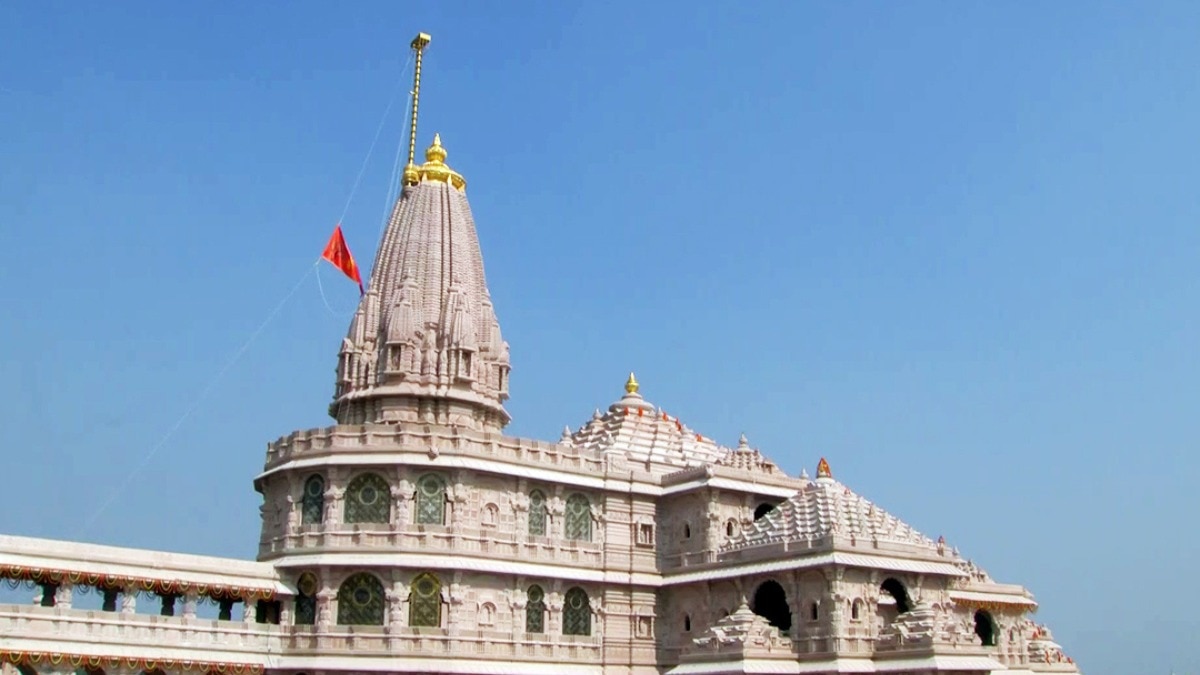
The ancient city of Ayodhya, revitalized by the grand consecration of the Ram Temple, is currently grappling with a crisis that extends far beyond the immediate confines of a criminal investigation. Allegations surrounding the pilferage of devotee donations from the newly established temple are not merely a matter for law enforcement; they are steadily manifesting as a tangible economic threat, undermining the very foundations of the city’s burgeoning tourism-driven prosperity. What was envisioned as a spiritual and economic renaissance is now facing an unprecedented challenge, as traders, transport operators, and pilgrims alike report a palpable shift in visitor sentiment and spending habits.
For the past two years, Ayodhya has experienced an extraordinary transformation, with the Ram Temple acting as the primary catalyst for an economic boom. Investments poured into infrastructure, hospitality, and ancillary services, all designed to cater to an anticipated influx of millions of devotees. This development brought with it a wave of optimism and prosperity, lifting countless local families into new economic opportunities. However, the recent controversy, which implicates the alleged siphoning off of substantial funds, has introduced a jarring discord into this narrative of growth and spiritual resurgence.
While official, quantifiable data on visitor numbers post-allegations remains elusive, the anecdotal evidence collected from a cross-section of Ayodhya’s commercial ecosystem paints a clear and concerning picture. Shopkeepers near the temple complex and throughout the city, proprietors of hotels and guesthouses, and the ubiquitous e-rickshaw drivers, who serve as the arteries of local transport, all speak of a discernible and troubling slowdown. Many acknowledge that the sweltering summer heat typically contributes to a seasonal dip in tourism; however, there is a widespread consensus among long-term residents and business owners that the current decline is far more pronounced and sustained than in previous summers, strongly suggesting an underlying cause beyond mere climatic factors.
The economic repercussions are not confined solely to the immediate vicinity of the majestic Ram Temple. The ripple effect has permeated throughout Ayodhya’s entire religious tourism circuit. Venerated sites such as Hanuman Garhi, an ancient temple dedicated to Lord Hanuman, and Kanak Bhawan, a significant shrine believed to be the private palace of Lord Rama and Sita, are also reportedly experiencing a significant reduction in pilgrim footfall. Business owners operating in these areas echo the sentiments of their counterparts near the main temple, expressing deep concern over lower-than-usual visitor numbers. For many within Ayodhya, the core concern has transcended the specifics of the criminal investigation; it has evolved into a profound worry about a growing perception among devotees that their sacred offerings may not be reaching their intended spiritual or charitable destinations.
One such affected individual is Nikhil Singh, who along with his family, operates the Flow of Saryu Restaurant, strategically located a few kilometers from the main temple, opposite the scenic Ram Ki Paidi. Singh’s account offers a granular insight into the deteriorating economic climate. He laments that business has plummeted significantly since the donation controversy began dominating public discourse and media headlines. “Ever since these allegations surfaced, footfalls have dropped by nearly 50 per cent,” Singh revealed, expressing a sentiment widely shared among his peers. He directly challenges the heat-related explanation, asserting, “People may blame the heat, but last year we did not see anything like this. Business has definitely gone down.”
Singh further elaborates on the pervasive nature of the discussion surrounding the allegations, noting that it has become an almost unavoidable topic among his clientele. “Everyone who comes here talks about it. They discuss what happened, whether it is true and how it gives Ayodhya a bad name,” he explained. The restaurant owner articulates a deeper fear shared by many Ayodhya residents: the potential tarnishing of the city’s meticulously built reputation. “This city has earned recognition because of the Ram Mandir. Nobody wants it to be known for something like this,” he emphasized, highlighting the cultural and emotional investment the local populace has in the temple’s image.
The hesitation fueled by the scandal is noticeably influencing the crucial act of donation itself, a cornerstone of Hindu pilgrimage. Shambhu Sharan, a devotee who undertook the pilgrimage from Muzaffarpur in Bihar with his family, articulated a deliberate decision to bypass the temple’s donation boxes. His reasoning underscores a fundamental shift in trust: “Had we come earlier, we would have offered whatever we could. But now, when we know what is allegedly happening to our hard-earned money, we have decided not to give anything. I would rather use that money for some good work.” This sentiment, articulated by Sharan, resonated with numerous other pilgrims interviewed, who, while steadfast in their unwavering faith in Lord Ram, openly admitted that the allegations of financial impropriety had prompted them to reconsider making cash offerings at the revered temple.
The economic ramifications extend directly to those whose livelihoods are intrinsically tied to the relentless flow of pilgrim traffic. An e-rickshaw driver, a ubiquitous sight in Ayodhya, responsible for ferrying visitors between the Ram Temple and various other sacred sites, provided a stark assessment of his daily earnings. He reported a dramatic decline in his daily passenger count: “Earlier, hundreds of thousands of devotees used to come. Now, on many days, it feels like only a few thousand are visiting. Our earnings have reduced significantly.” While such estimates are inherently anecdotal and difficult to independently verify without official data, similar concerns regarding plummeting income and reduced patronage were consistently voiced by a wide array of transport operators, small traders, and service providers across the entire city.
The concerns gripping Ayodhya transcend mere immediate business losses; they delve into the very fabric of the city’s aspirational future. Since the historic consecration of the Ram Temple in January 2024, Ayodhya has embarked on an ambitious trajectory of unprecedented economic and infrastructural expansion. The city has witnessed a rapid proliferation of new hotels, modern restaurants, expanded transport services, new shops, renovated guesthouses, and a multitude of small businesses, all strategically established to accommodate and capitalize on the anticipated pilgrim surge. The Ram Temple, in essence, has become the undisputed centerpiece of Ayodhya’s new economic model, with literally thousands of local families now directly or indirectly dependent on the robust tourism ecosystem that has blossomed around it. The potential for a sustained downturn, driven by eroded trust, therefore poses an existential threat to this meticulously cultivated economic growth and the financial stability of its beneficiaries.
The seriousness of the situation has not gone unnoticed by the very institutions entrusted with the temple’s welfare. Mahant Dinendra Das, a prominent member of the Shri Ram Janmbhoomi Teerth Kshetra, the venerable trust responsible for the intricate management and administration of the Ram Temple, had previously articulated his profound concern that the ongoing donation controversy could severely impair both the confidence of pilgrims and the volume of their financial contributions. While explicitly welcoming the ongoing investigation into the allegations as a necessary step towards accountability, Mahant Das acknowledged the distressing likelihood that this episode would inflict a lasting scar on the temple’s revered image and, consequently, its ability to attract substantial financial support from devotees.
The true extent and duration of the current decline in visitor footfall remain subjects of considerable conjecture. Whether this present slump proves to be a temporary blip, perhaps exacerbated by seasonal factors, or if it indeed represents the harbinger of a more protracted and damaging trend, will only become unequivocally clear once official, rigorously compiled tourism data becomes available for comprehensive analysis. Furthermore, much of Ayodhya’s immediate economic recovery and its long-term stability will hinge critically on the conclusive outcome of the ongoing criminal investigation. A transparent, thorough, and swiftly concluded inquiry that restores public confidence in the integrity of the temple’s financial stewardship is paramount. Investigators have indicated that the temple has allegedly been defrauded of a significant sum, estimated at approximately Rs 7.9 crore worth of donations, underscoring the gravity and scale of the purported malfeasance.
An overwhelming sentiment among a diverse cross-section of Ayodhya’s populace is that the controversy has regrettably fostered an unwelcome atmosphere of pervasive uncertainty. Despite the prevailing concerns, the continuous flow of pilgrims has not entirely ceased; crowds continue to arrive, prayers continue to be reverently offered, and the majestic Ram Temple undeniably retains its status as the city’s foremost spiritual and tourist magnet. Yet, for the very first time since its momentous inauguration, fundamental questions concerning the ethical handling of devotees’ sacred donations have regrettably permeated the pilgrimage experience itself. These questions are not merely academic; they are actively influencing public trust, recalibrating the economic behaviors of visitors, and, most critically, jeopardizing the very economic vibrancy that has so spectacularly blossomed around Ayodhya’s most cherished spiritual edifice. The path to restoring unwavering faith, both spiritual and financial, will undoubtedly be a challenging one, requiring concerted efforts towards transparency, accountability, and a renewed commitment to the principles of trust and devotion that originally propelled Ayodhya’s incredible rebirth.
source: India Today