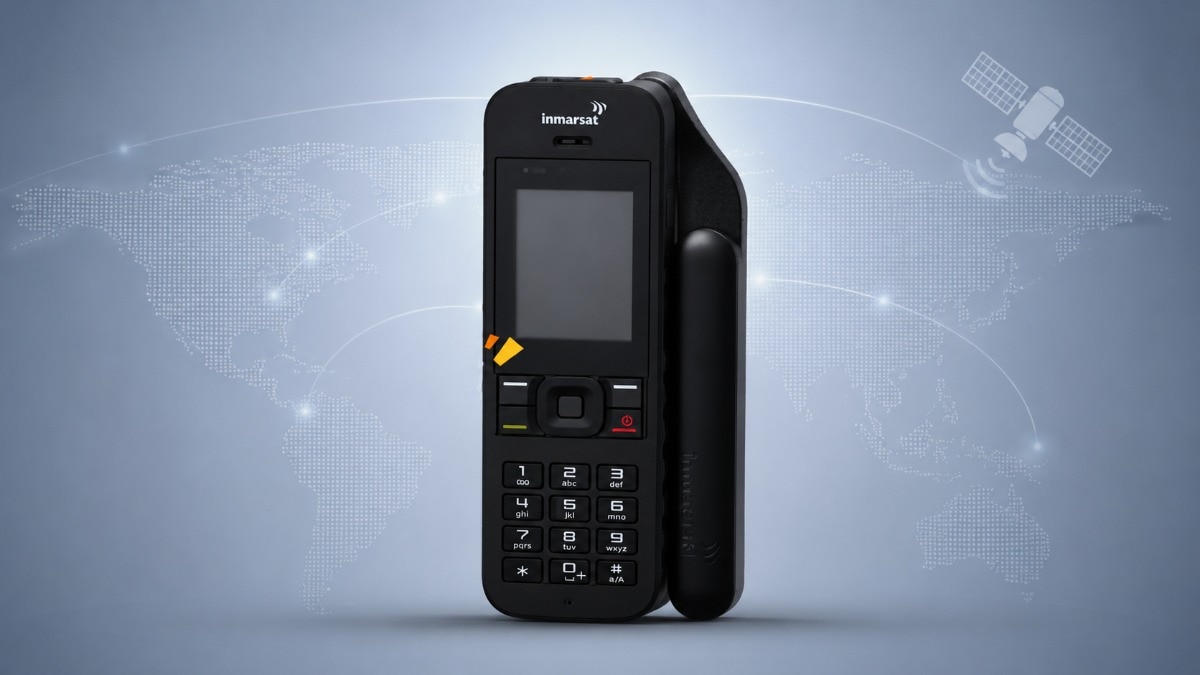
In a strategic move to bridge critical communication gaps across India's vast and diverse geography, Bharat Sanchar Nigam Limited (BSNL), the state-owned telecommunications enterprise, has officially launched a advanced satellite phone. This specialized device, retailed at an approximate cost of Rs 1,34,166, inclusive of all applicable taxes, is engineered to ensure seamless voice communication in regions entirely devoid of conventional mobile tower infrastructure. Far from being a consumer-grade smartphone, this instrument represents a dedicated solution for scenarios where traditional cellular networks are simply non-existent or have been rendered inoperable, a necessity often encountered in remote, off-grid locations, or during emergencies.
The introduction of this satellite phone by BSNL underscores a deeper commitment to national connectivity and safety, extending beyond the typical urban and semi-urban cellular footprint. Unlike the ubiquitous smartphones that rely on a dense lattice of terrestrial mobile towers, BSNL's offering establishes direct communication links with orbiting satellites. This fundamental distinction is what empowers the device to operate effectively in challenging terrains such, as high mountains, dense forests, expansive deserts, or vast stretches of open water, where deploying and maintaining traditional cellular base stations is either economically unviable or logistically impossible. The strategic positioning by BSNL emphasizes its role as a provider of last-resort communication, serving a critical national interest rather than merely competing in the saturated consumer smartphone market.
However, the acquisition and utilization of such advanced communication technology in India are not without stringent regulatory oversight. Reflecting national security considerations and the sensitive nature of satellite communication, prospective users of the BSNL satellite phone are mandated to secure explicit authorization from the Department of Telecommunications (DoT) before purchase or operation. This regulatory framework ensures that the devices are deployed responsibly and by authorized entities, mitigating potential misuse and safeguarding strategic communication channels. This requirement significantly differentiates it from consumer electronics, emphasizing its role as a tool for mission-critical applications rather than everyday personal communication.
The operational mechanics of the BSNL satellite phone are rooted in sophisticated satellite telemetry. While conventional mobile phones ping the nearest cellular tower, which then routes calls through a terrestrial network, the satellite phone bypasses this entire infrastructure. Instead, it establishes a direct line-of-sight connection with a satellite orbiting Earth. This satellite acts as a relay, receiving the signal from the handheld device and then transmitting it to a ground station, which subsequently connects the call to the desired recipient, whether they are on another satellite phone or a regular landline/mobile network. This direct-to-satellite capability is precisely what grants it unparalleled reach, making it invaluable in situations where ground-based infrastructure has failed or never existed, particularly during natural disasters or in remote operational theaters.
BSNL's collaborative partnership with global satellite network providers, specifically Inmarsat, is a cornerstone of this service. Inmarsat, a leading name in global mobile satellite communications, operates a constellation of geostationary satellites that provide global coverage, ensuring high reliability and stability for voice and data services. This collaboration grants BSNL access to a robust and established satellite infrastructure, enabling it to deliver dependable satellite-based communication solutions across even the most isolated regions of India and beyond its territorial waters. The choice of Inmarsat, known for its high-quality voice services and long-term commitment to maritime and aviation sectors, speaks to the reliability BSNL aims to offer.
Key features of the BSNL satellite phone are meticulously tailored for critical communication scenarios. Firstly, its primary offering is uninterrupted satellite connectivity, providing a lifeline in areas far removed from conventional mobile network coverage. This is its fundamental value proposition. Secondly, it facilitates reliable voice calling from remote locations, enabling coordination and contact even from the most inaccessible terrains, which is crucial for safety and operational efficiency. Thirdly, the device incorporates dedicated SOS emergency support. This critical function allows users in distress to transmit an emergency signal and their location to response centers, a feature that can be life-saving in situations like maritime emergencies, mountaineering accidents, or isolated industrial incidents. This is often integrated with international search and rescue protocols, significantly increasing survival chances.
Furthermore, the BSNL satellite phone is engineered with a long battery life, a paramount consideration for devices operating away from consistent power sources. In remote environments, access to charging facilities is often scarce, making extended operational periods between charges absolutely essential for sustained communication. This design choice reflects an understanding of the challenging field conditions its target users will encounter. Finally, its rugged and durable design ensures resilience against harsh environmental conditions. This implies resistance to dust, water, extreme temperatures, and physical shock, making it suitable for deployment in challenging industrial, military, or environmental settings. Such durability often involves specialized materials and sealing, conforming to military-grade standards like IP ratings for ingress protection against solids and liquids.
The target demographic for the BSNL satellite phone is distinctly specialized, diverging sharply from the mass consumer market for smartphones. BSNL has unequivocally stated that the device is not intended for everyday smartphone users but rather for individuals and organizations whose operational imperatives demand unfailing communication in areas where terrestrial mobile networks are simply unavailable or unreliable. This strategic focus highlights the product's utility in specific sectors, each with unique and demanding communication requirements.
Among the primary beneficiaries are personnel involved in defence operations. For military units operating in border areas, rugged terrains, or hostile environments, conventional communication infrastructure is often non-existent or vulnerable. Satellite phones provide secure and reliable communication channels crucial for command, control, and coordination, enabling strategic advantage and troop safety. The ability to communicate beyond line-of-sight is paramount for modern military operations, especially in India's complex geopolitical landscape.
The maritime industry represents another significant user base. Sailors, fishermen, and shipping companies traversing vast oceans or operating in coastal areas beyond terrestrial network range rely heavily on satellite communication for navigation, weather updates, crew welfare, and emergency calls. International maritime regulations often mandate specific satellite communication capabilities for vessels, making such devices indispensable for safety at sea. The ocean environment is one of the ultimate off-grid scenarios, necessitating robust and reliable satellite links.
For disaster response teams, the BSNL satellite phone offers an invaluable tool. In the immediate aftermath of natural calamities such as earthquakes, floods, or cyclones, terrestrial communication networks are frequently compromised or entirely destroyed. Satellite phones become the sole means for first responders to coordinate relief efforts, transmit critical information, and establish contact with affected populations, playing a pivotal role in saving lives and mitigating further damage. Their ability to function independently of local infrastructure is key during these critical hours.
Operations within the mining sector also present compelling use cases. Mining sites are often located in remote, difficult-to-reach areas, sometimes underground, where cellular coverage is absent. Satellite phones enable communication between surface and underground operations, facilitate emergency protocols, and ensure the safety of workers in isolated environments. The ruggedness of these phones is particularly important in such harsh industrial settings, where equipment is subjected to extreme conditions and potential damage.
Similarly, industries engaged in remote industrial operations, such as oil and gas exploration, pipeline monitoring, or large-scale infrastructure projects in undeveloped regions, face consistent communication challenges. These operations often span vast, uninhabited areas, making satellite communication essential for project management, logistics, safety monitoring, and rapid response to operational issues. The ability to connect disparate teams over vast distances without relying on vulnerable local networks is a significant advantage.
Furthermore, the device caters to pilgrims travelling through isolated regions and adventure travel enthusiasts. India is home to numerous pilgrimage routes that traverse challenging mountain passes or remote forests, as well as vast opportunities for adventure sports like trekking, mountaineering, and desert safaris. In these contexts, conventional mobile networks are often unavailable, making satellite phones a crucial safety device for contacting emergency services, sharing locations, or simply staying in touch with family, offering peace of mind in high-risk recreational activities. The specific needs of those undertaking arduous journeys, where even a minor incident can escalate rapidly without communication, are well served by this technology.
The pricing of the BSNL satellite phone at Rs 1,34,166 positions it as a highly specialized and significant investment, reflecting its advanced technology, global connectivity capabilities, and the critical nature of its applications. This cost structure is vastly different from that of consumer smartphones, which benefit from economies of scale and mass market adoption. Satellite phones, by contrast, are niche products requiring sophisticated hardware, specialized research and development, and access to expensive satellite network infrastructure. The price point is justifiable given the unparalleled connectivity and life-saving potential it offers in environments where no other communication means exist.
Beyond the initial hardware cost, prospective users should also anticipate recurring service charges, which are typically structured through various subscription plans offered by satellite service providers. These plans usually vary based on usage volume, geographic coverage, and included services (e.g., voice minutes, data allowances, SMS capabilities). While specific BSNL service plans for this device were not detailed, the industry standard for satellite phone subscriptions generally reflects the premium nature of the service, due to the high operational costs associated with maintaining and utilizing satellite constellations. This total cost of ownership, including both the upfront hardware expense and ongoing service fees, must be carefully considered by authorized individuals and organizations.
As reiterated by BSNL, the purchase and use of this satellite phone are contingent upon securing necessary authorization from the Department of Telecommunications. This strict adherence to regulatory protocols is not merely bureaucratic but an essential measure for national security. Unauthorized possession or operation of satellite communication devices can lead to severe legal ramifications under Indian law, including significant penalties and imprisonment. This regulatory environment underscores the government's recognition of satellite phones as a strategically important communication asset, necessitating strict control to prevent misuse that could compromise national interests or security. The DoT's involvement ensures a controlled and accountable deployment of this powerful communication tool, aligning with broader strategic telecommunication policies within the country.
For entities or individuals interested in obtaining further information regarding the BSNL satellite phone service, the company has established clear channels of inquiry. Prospective users can visit their nearest BSNL office, where dedicated personnel can provide detailed insights into the device specifications, pricing, regulatory application processes, and available service plans. Additionally, a direct contact number, 9768866652, has been provided for telephonic inquiries, offering a convenient avenue for immediate assistance and clarification. This proactive approach to information dissemination ensures that all interested parties have access to the necessary guidance for navigating the authorization and acquisition process, fostering transparency and accessibility for legitimate users.
The launch of this satellite phone also coincides with, and in some ways complements, BSNL's broader and ongoing efforts to expand its terrestrial network infrastructure across India. The telecom operator has recently achieved a significant milestone, commissioning nearly 99,000 4G sites as part of its ambitious nationwide rollout initiative. This massive investment in upgrading and expanding its conventional mobile network signifies BSNL's dual strategy: addressing the mass market and urban/semi-urban connectivity needs through 4G expansion, while simultaneously catering to ultra-remote and critical communication requirements through satellite technology. The government's consideration of allowing BSNL to deploy additional 4G sites further underscores the strategic importance placed on strengthening BSNL's role in the national telecommunications landscape. These two initiatives, though distinct in their technological approach, collectively aim to achieve comprehensive and robust connectivity across the entire Indian subcontinent, ensuring that no region or critical operation remains disconnected.
The strategic implications of BSNL's satellite phone launch are far-reaching. It not only enhances India's communication resilience in times of crisis but also empowers various critical sectors to operate more efficiently and safely in remote areas. This move positions BSNL not just as a conventional telecom service provider but as a crucial enabler of national infrastructure, security, and socio-economic development, particularly in areas historically underserved by modern communication technologies. By providing a reliable communication backbone in the most challenging conditions, BSNL is actively contributing to India's vision of universal connectivity, ensuring that vital services and personnel can always remain connected, irrespective of geographical barriers or infrastructural limitations.
This initiative also highlights the increasing convergence of terrestrial and satellite communication technologies, where each serves a distinct yet complementary purpose. While 4G and upcoming 5G networks provide high-speed, high-bandwidth services in densely populated areas, satellite communication fills the vital void in sparsely populated or geographically challenging regions. This integrated approach ensures a holistic communication strategy, leveraging the strengths of both paradigms to create a robust and resilient national network. The deployment of this satellite phone is a testament to India's commitment to technological advancement and its dedication to safeguarding and connecting all its citizens and critical operations, from the deepest oceans to the highest peaks, demonstrating a comprehensive vision for national connectivity.
source: India Today