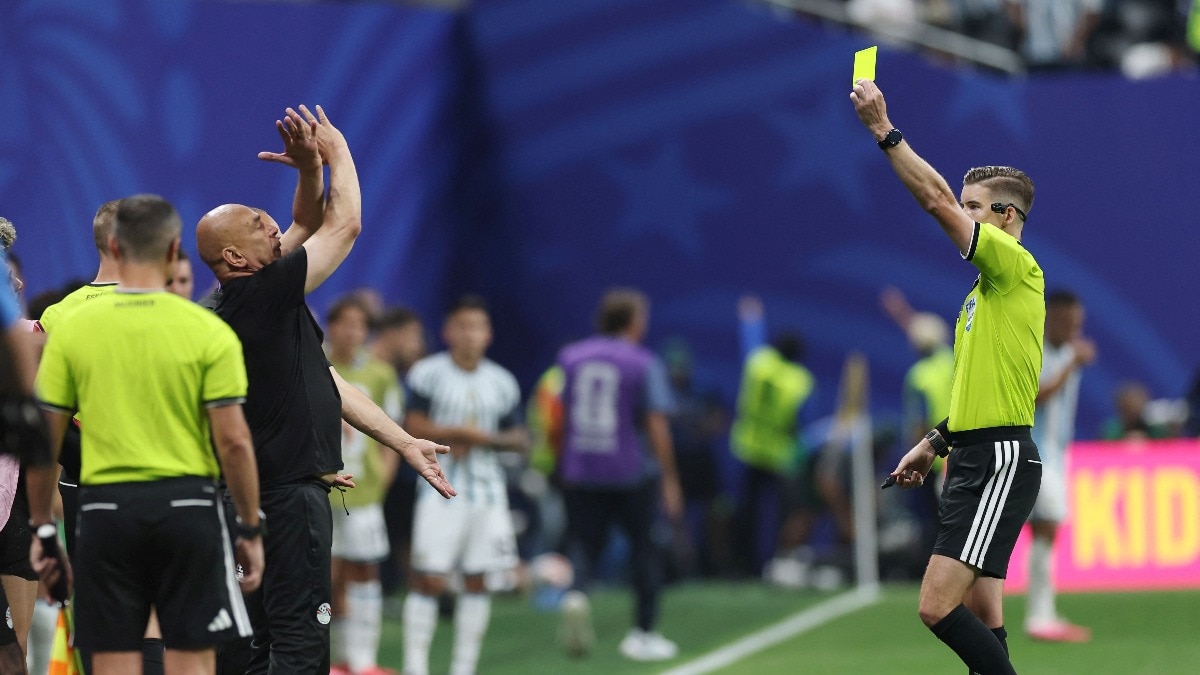
The pulsating atmosphere of a FIFA World Cup Round of 16 encounter between Egypt and Argentina on Tuesday delivered far more than just sporting drama; it unfolded into a complex tapestry of high-stakes football, contentious officiating, and a startling incident that brought FIFA’s anti-racism protocols under intense scrutiny. What began as a surprising and spirited performance by the Egyptian national team, carving out a significant lead against the reigning world champions, culminated in a dramatic 3-2 defeat shadowed by a controversial VAR decision and the inexplicable yellow card shown to Egypt’s coach, Hossam Hassan, for utilizing an official anti-racism gesture.
Atlanta Stadium bore witness to an electrifying contest where Egypt initially defied expectations, seizing an early advantage against an Argentine squad widely tipped to defend their title. The Pharaohs, demonstrating tactical discipline and offensive flair, managed to establish a commanding 2-0 lead, sending shockwaves through the tournament and galvanizing their supporters. Their initial goals were products of well-executed strategies, leveraging speed and precision to bypass Argentina's formidable defense. This early dominance set the stage for a potential upset, a narrative that captivated audiences worldwide as the African contenders displayed a resilience and attacking prowess that belied their underdog status.
However, the momentum of the match took a contentious turn with a pivotal VAR intervention early in the second half. Egyptian forward Mostka Ziko appeared to have doubled his nation's lead, brilliantly combining with star player Mohamed Salah to net what seemed like a legitimate goal. The jubilant celebrations, indicative of the magnitude of a three-goal advantage against a team of Argentina’s caliber, were abruptly halted by the referee, French official Francois Letexier, who was alerted to a potential infringement by the Video Assistant Referee. After a lengthy review at the pitchside monitor, Letexier controversially overturned the goal, citing an alleged foul on Argentine defender Lisandro Martinez in the build-up. The decision, coming at such a critical juncture, fundamentally altered the course of the game and ignited immediate, furious protests from the Egyptian bench and players.
The specifics of the VAR review centered on an incident that occurred a considerable distance and several phases of play prior to Ziko finding the back of the net. The perceived foul on Martinez was deemed minimal by many observers, raising serious questions about the temporal and spatial limits of VAR intervention. This ruling left the Egyptian contingent utterly bewildered and incensed, feeling unjustly deprived of a goal that would have placed them in an almost unassailable position. The psychological blow to the Egyptian squad was immense, puncturing their burgeoning confidence and allowing a glimmer of hope to flicker back into the Argentine camp, which had, until then, appeared stunned and outmatched.
Amidst the escalating tension and the palpable frustration stemming from the disallowed goal, another deeply concerning incident unfolded. As emotions reached a fever pitch, with several Egyptian players and members of the coaching staff already receiving cautions and one bench member being sent off, Hossam Hassan, the Egypt coach, stepped forward. Standing directly in front of referee Letexier, Hassan explicitly made the
source: India Today