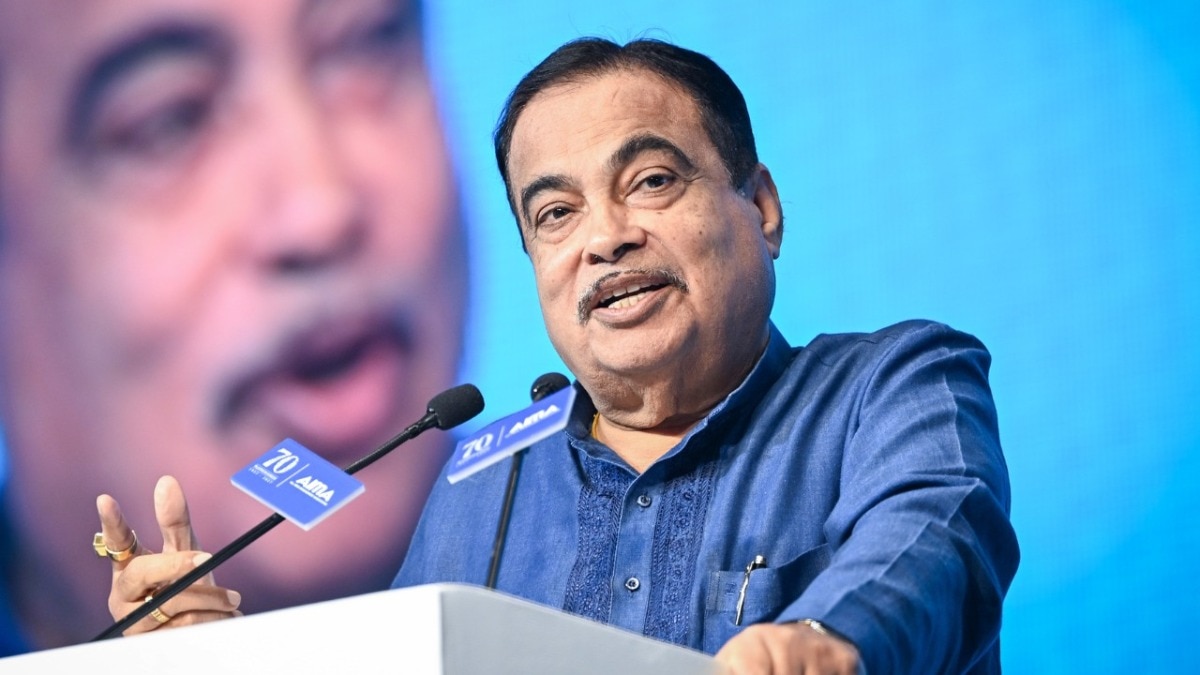
Union Road Transport and Highways Minister Nitin Gadkari has issued a robust and unequivocal defense of India's ambitious ethanol-blending initiative, firmly dismissing a barrage of allegations concerning conflict of interest and potential harm to vehicles. In a resolute address, the minister challenged detractors to furnish concrete evidence of any petrol-powered vehicle sustaining damage due to the adoption of E20 fuel, while simultaneously emphasizing that the overarching objective of this policy remains anchored in curtailing the nation's substantial fuel import dependency, fostering the proliferation of cleaner energy alternatives, and significantly augmenting the economic prosperity of agricultural communities.
Addressing the contentious claims head-on, Gadkari categorically rejected any insinuation of a personal pecuniary stake in the expansive ethanol program. He meticulously clarified that his family's long-standing involvement in the sugar industry predates the government's formulation and implementation of the national ethanol policy by a considerable margin. Furthermore, he highlighted that his family's minuscule proportional share in the country's overall ethanol production renders any notion of significant personal financial benefit utterly negligible and without foundation. This detailed clarification aimed to dismantle the core premise of the conflict of interest allegations, asserting that a stake of such marginal proportion could not conceivably sway national policy for individual gain.
“The assertion that I have personally engineered the ethanol policy for my own financial enrichment is utterly devoid of truth and completely baseless,” Gadtari stated with conviction. He elaborated on the sheer scale of India's ethanol production landscape, noting that the nation currently boasts approximately 550 operational ethanol-producing units, collectively generating close to 1,500 crore litres of ethanol annually. Against this monumental national output, the minister underscored that his family's share in this vast production volume stands at an almost imperceptible 0.07 per cent. This infinitesimal stake, he argued, unequivocally precludes any possibility of him leveraging his position to influence a policy of such national magnitude for personal advantage, rendering the conflict of interest narrative unsustainable.
The minister's advocacy for alternative fuels extends beyond ethanol, a point he frequently reiterates to contextualize the current policy within a broader vision of energy diversification. Gadkari consistently champions a holistic approach to energy independence, where ethanol serves as one crucial component within a larger tapestry of sustainable fuel options. He has consistently articulated that the ethanol-blending policy is not merely an environmental measure but a strategic imperative designed to alleviate India's heavy reliance on imported crude oil, thereby fortifying the nation's energy security and significantly benefiting its vast agricultural sector, particularly sugar cane farmers who find a new, stable market for their produce.
Furthermore, Gadkari strongly refuted claims that the ethanol-blending policy was a unilateral decision driven by his ministry alone. He meticulously outlined the multi-faceted, collaborative, and scientifically informed process that underpins the formulation of such significant national policies. He emphasized that the decision-making framework for ethanol blending involved extensive consultations with critical stakeholders, including the Petroleum Ministry, rigorous evaluations by the Union Cabinet, and a thorough review of scientific research and expert recommendations. This comprehensive consultative approach, he argued, ensures that the policy is robust, well-vetted, and reflective of a collective national consensus rather than an individual's directive.
A significant portion of the ongoing public discourse revolves around the purported detrimental effects of ethanol-blended fuel on vehicle engines. Gadkari directly addressed these concerns, issuing an open challenge to critics to provide verifiable evidence of any vehicle damage attributable to E20 fuel. He extended an offer for any vehicle owner who believes their petrol vehicle has been compromised by ethanol to lodge a formal complaint with the respective vehicle dealer and concurrently with his ministry. He assured that such complaints would trigger a thorough investigation, with appropriate relief mechanisms to be instituted should a causal link be established.
To underscore the gravity of his challenge, the minister posed a direct question: “Can anyone credible name even a couple of individuals known personally whose petrol vehicles have conclusively suffered damage directly as a result of using ethanol-blended fuel?” This rhetorical query aimed to highlight the absence of widespread, substantiated complaints despite the policy's increasing implementation. He further corroborated this stance by referencing major automotive manufacturers operating within India, including industry giants such as Maruti Suzuki, Toyota, Tata Motors, and Mahindra. According to the minister, these leading automakers have not reported any significant or systemic complaints explicitly linking the use of ethanol-blended fuel to widespread vehicle malfunction or damage.
Gadkari also brought to light a recent, high-profile case involving a Toyota vehicle that had allegedly experienced issues attributed to ethanol-blended fuel. A comprehensive investigation into this particular incident, he revealed, concluded that the actual cause of the malfunction was not the ethanol content but rather water contamination within the fuel system. This specific case serves as a critical illustration, often misattributed, demonstrating the necessity for thorough investigation before assigning blame. The minister further reassured the public that the E20 program is far from an experimental endeavor. He detailed the rigorous testing protocols, explaining that vehicles designed for E20 undergo extensive evaluation for periods extending up to four years and traverse hundreds of thousands of kilometers under varied conditions before receiving final approval for market release, ensuring their reliability and compatibility.
In a pointed observation, Gadkari characterized the surge of skepticism and allegations surrounding the ethanol program as politically motivated. He posited that there is a discernible “attempt to malign my reputation and to systematically discredit the ethanol program” itself. This assertion hints at a broader political undercurrent, suggesting that the debate is not solely about policy efficacy or technical concerns but potentially intertwined with partisan agendas seeking to undermine the government's initiatives and the minister's public standing. The timing and nature of certain criticisms, he implied, point towards a concerted effort to create a narrative of controversy.
Beyond India's domestic context, the minister underscored the global prevalence and acceptance of ethanol as a viable alternative fuel. He cited numerous technologically advanced nations and emerging economies that have successfully integrated ethanol into their fuel matrices, including the United States, Brazil, Japan, Germany, Thailand, and Sweden. This international comparison serves to bolster the credibility of India's policy, demonstrating that the nation is not embarking on an unproven or novel experiment but rather adopting globally recognized and scientifically validated practices in sustainable energy. The experiences of these countries, some of which have been utilizing high ethanol blends for decades, offer a blueprint and a testament to the safety and efficacy of such programs.
The Union Transport Minister's assertive remarks arrive amidst an ongoing public debate that continues to scrutinize the implications of E20 petrol. Key areas of concern frequently highlighted by a segment of vehicle owners and certain industry observers include potential impacts on fuel efficiency and the compatibility of older vehicle models not originally engineered to accommodate higher ethanol blends. While government bodies and expert panels consistently reiterate that there is no scientifically proven evidence definitively linking E20 fuel to systematic damage in vehicles, these concerns persist. The apprehension often stems from a lack of complete understanding about engine design adaptations for ethanol compatibility and the perceived risks associated with long-term exposure to a fuel blend different from what original vehicle specifications might have indicated for older models. The government's continued communication efforts aim to bridge this information gap and provide clear guidelines and assurances to the public and the automotive industry.
The Indian government's strategic push for ethanol blending is intrinsically linked to its broader vision for energy independence and economic upliftment, particularly for the agrarian sector. By leveraging surplus agricultural produce, primarily sugarcane, for ethanol production, the policy creates an alternative revenue stream for farmers, thereby insulating them from market fluctuations in food commodity prices. This diversification not only stabilizes farmer incomes but also transforms agricultural waste or surplus into a valuable energy resource, contributing to a circular economy model. The reduction in crude oil imports, a significant drain on foreign exchange reserves, offers substantial macroeconomic benefits, strengthening the nation's fiscal health and reducing its vulnerability to global oil price volatilities. This dual benefit—environmental and economic—forms the bedrock of the government's unwavering commitment to the ethanol program.
The debate surrounding ethanol, therefore, transcends mere technical specifications; it delves into complex intersections of national energy policy, agricultural economics, environmental sustainability, and political dynamics. Gadkari's staunch defense is not merely a personal rebuttal but a broader governmental affirmation of a policy deemed vital for India's future. The minister's insistence on evidence-based criticism and his challenge to those raising alarm signifies a call for a more informed and data-driven discourse, moving beyond anecdotal fears or politically charged rhetoric. As India continues its trajectory towards achieving its ambitious E20 blending targets, the dialogue between policy implementers, industry, and the public will remain crucial in navigating the challenges and fully realizing the manifold benefits of this transformative energy initiative.
The long-term success of the ethanol-blending program will ultimately hinge on robust monitoring, continued research into fuel compatibility across diverse vehicle fleets, and transparent communication with all stakeholders. Addressing consumer anxieties through clear, accessible information and effective redressal mechanisms for genuine issues will be paramount. As the nation progressively moves towards higher blends of ethanol, the collaborative efforts of government, automobile manufacturers, and fuel suppliers will be indispensable in ensuring a seamless and confident transition, thereby solidifying India's pathway to a more sustainable and energy-secure future, largely insulated from the caprices of international energy markets and fostering domestic economic growth.
source: India Today