In a dramatic escalation of tensions, President Donald Trump has issued an unequivocal warning of impending, severe military strikes against Iran, signaling a critical turning point in the volatile relationship between Washington and Tehran. The declaration, made hours after a substantial US military operation targeted over 80 Iranian sites, including critical air defense systems, coastal radar facilities, command-and-control centers, and approximately 60 vessels belonging to the Islamic Revolutionary Guard Corps (IRGC), underscores a deepening crisis that threatens to destabilize the broader Middle East and impact global energy markets.
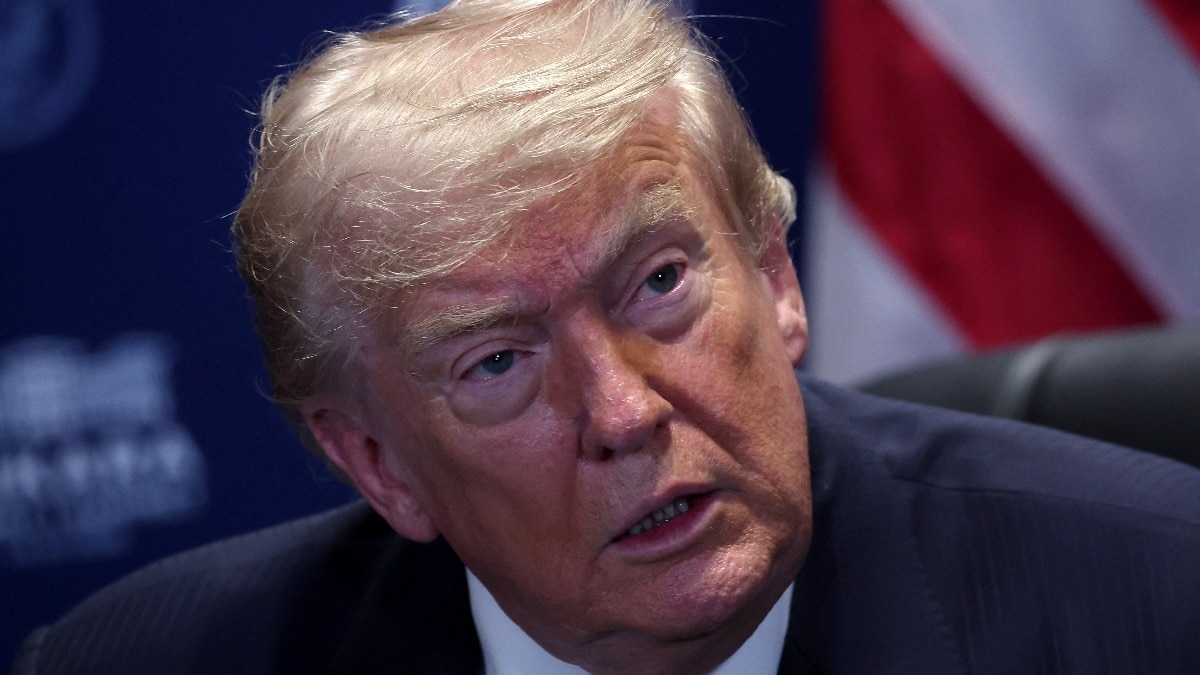
Speaking to reporters during the NATO summit in Turkey, before a scheduled meeting with Ukrainian President Volodymyr Zelenskyy, President Trump’s words left little ambiguity regarding the United States’ intent. He stated, “I’ll give a a little warning: We’re going to hit them hard tonight.” This pronouncement follows a series of calculated US military engagements aimed at degrading Iran’s capacity to threaten international shipping and security in the Persian Gulf, particularly in the strategically vital Strait of Hormuz. The targets selected for the initial wave of strikes were indicative of a strategy to dismantle key elements of Iran’s defensive and offensive maritime capabilities, impacting their ability to monitor, command, and deploy naval assets in the region.
The extensive nature of the initial US strikes cannot be understated. Operations specifically targeted Iranian air defense systems, which are crucial for protecting national airspace and key strategic sites. The neutralization of coastal radar facilities was designed to blind Iran’s ability to track maritime traffic and detect incoming threats, significantly diminishing their situational awareness. Command-and-control centers, vital nodes for coordinating military operations, were also hit, aiming to disrupt Iran’s unified response capabilities. Furthermore, the destruction of around 60 IRGC vessels operating near the Strait of Hormuz represents a direct assault on the operational backbone of Iran’s naval power projection in the waterway, which the US alleges has been used to harass commercial shipping. These actions, according to the US Central Command (CENTCOM), were a direct response to recent Iranian attacks on three commercial oil tankers navigating the strategic waterway, highlighting Washington’s commitment to maintaining freedom of navigation.
President Trump’s rhetoric extended beyond simply confirming further military action. He provided insights into the scale of the preceding overnight strikes, claiming US forces had “knocked out 28 boats” and indicating a readiness to “probably” destroy more Iranian vessels if deemed necessary. This aggressive posture suggests a zero-tolerance approach to any perceived Iranian provocations or threats to maritime security. The President also hinted at a potential broadening of the conflict beyond purely military assets, floating the highly provocative idea of targeting Iran’s electricity grid and water facilities. While he added a caveat that he hoped such extreme measures would not be required, the mere mention of critical civilian infrastructure as potential targets sends a powerful message about the depth of US resolve and the potential for severe economic and societal disruption in Iran.
Perhaps one of the most striking and economically significant threats articulated by President Trump was the possibility of the US “may take over” Kharg Island, Iran’s primary oil export terminal. Kharg Island is an indispensable component of Iran’s economy, serving as the main hub for the country’s crude oil exports, which constitute a vast majority of its national revenue. A direct threat to this facility underscores an intention to cripple Iran’s economic lifelines, an act that would have profound implications for global oil supply and prices. Moreover, Trump mentioned the potential for Washington to restore a blockade in the Strait of Hormuz, a narrow choke point through which approximately one-fifth of the world’s petroleum and other liquids pass daily. He also indicated that NATO countries would deploy minesweepers to secure this strategically vital waterway, suggesting a coordinated international effort to ensure energy security against perceived Iranian threats.
Crucially, President Trump also formally declared the memorandum of understanding (MoU), a fragile agreement signed just three weeks prior to halt hostilities between Washington and Tehran, as effectively collapsed. “For me, the MoU is over. I don’t want to deal with them anymore,” he stated when questioned about the future of the accord. This declaration marks a significant setback for diplomatic efforts, extinguishing any immediate hope for de-escalation through established channels. Despite formally declaring the agreement dead, Trump’s remarks contained a degree of internal contradiction, as he indicated that negotiators could potentially continue talking, though he largely dismissed such diplomatic efforts as futile. “I will speak to our negotiators… As far as I am concerned, it is just a waste of time dealing with them. They are liars,” he asserted, highlighting a profound distrust and a pessimistic outlook on the prospects of dialogue with the current Iranian leadership.
Further emphasizing his disdain for Tehran’s regime, the US President launched a scathing personal attack on Iran’s leadership. He characterized them as “scum,” “sick people,” and “vicious, violent people,” adding that, in his view, “If they had a nuclear weapon they’d use it.” This highly inflammatory rhetoric is unprecedented in recent US-Iran relations and serves to deepen the chasm between the two nations, making any future diplomatic rapprochement exceptionally challenging. Such language not only alienates the current Iranian government but also hardens public opinion on both sides, making compromise exceedingly difficult.
In response to these developments, Iran swiftly accused Washington of violating the fragile ceasefire understanding through a combination of military and economic actions. In a statement disseminated by its Foreign Ministry, Tehran contended that the US strikes on monitoring and surveillance centers along the country’s southern coast directly breached commitments made under the interim agreement. These centers are integral to Iran’s coastal defense and maritime oversight capabilities, and their targeting is seen by Iran as a deliberate act of aggression that undermines the spirit and letter of any de-escalation efforts. Iran’s swift and indignant reaction underscores the deep-seated mistrust that has plagued relations between the two countries for decades.
Tehran’s criticisms were not limited to military actions. The Iranian Foreign Ministry also lambasted the US Treasury’s decision to revoke a 60-day license that had permitted Iran to sell oil on international markets using US dollars. This economic measure, which severely impacts Iran’s ability to generate revenue from its most critical export, was cited by Iran as a clear failure on Washington’s part to honor its obligations under the ceasefire arrangement. The ministry argued that the combined effect of military action and renewed economic pressure constituted a direct violation of the understandings governing navigation and security in the Strait of Hormuz, asserting that the US was employing a multifaceted strategy to undermine Iran’s sovereignty and economic stability.
Moreover, Iran pointed an accusing finger at continued Israeli military operations in Lebanon, blaming them for further undermining key elements of the ceasefire framework. Tehran suggested that the latest escalation rested squarely with both Washington and Israel, implying a coordinated effort to pressure Iran on multiple fronts. This accusation highlights the complex web of regional alliances and rivalries that often intersect with the US-Iran dynamic, adding another layer of geopolitical complexity to an already volatile situation. The inclusion of Israel in Iran’s condemnation indicates a broader regional context, where the actions of one actor are seen as intrinsically linked to the objectives of others.
Washington, however, has maintained a firm stance, defending its military operations as a necessary measure. CENTCOM reiterated that the strikes were essential after Iran targeted three commercial vessels passing through the Strait of Hormuz. The command emphasized that the operation was specifically intended to reduce Iran’s ability to threaten international shipping through one of the world’s busiest energy routes. The US military stated, “Centcom forces remain postured and prepared to hold Iran accountable when the agreement is not adhered to or obeyed,” signaling a readiness for sustained engagement to protect perceived US interests and international maritime law. This position underscores the US’s view that its actions are defensive and aimed at deterring further Iranian aggression in a critical global artery.
The immediate impact of the strikes was corroborated by Iranian state media, which reported multiple explosions in key port cities such as Bandar Abbas, Sirik, and on Qeshm Island. These locations are strategically important for Iran’s naval operations and commercial shipping, confirming the extensive reach and effectiveness of the US military action. President Trump later reinforced these reports by sharing a video on social media, purportedly showing explosions in Bandar Abbas, further solidifying the narrative of a decisive US response and projecting an image of strength and resolve. The visual confirmation, whether official or unofficial, adds another dimension to the information warfare accompanying the military escalation.
Adding to the regional unease, Iran also issued a stern warning to neighboring countries bordering the Persian Gulf. Tehran urged these nations not to permit the US or its allies to use their territory or military facilities for operations against Iran. The Foreign Ministry explicitly stated that any country found assisting attacks on Iran would be regarded as complicit in the aggression, implying potential retaliation. This warning places immense pressure on Gulf Arab states, many of whom host significant US military presences and have historically aligned with Washington’s regional policies. The threat of complicity effectively broadens the potential scope of any future conflict, drawing in other regional players and significantly increasing the stakes.
Furthermore, Iran reaffirmed its inherent right to defend its sovereignty under Article 51 of the United Nations Charter. This invocation of international law underscores Tehran’s position that its actions are legitimate and defensive. It also warned that its armed forces “will not hesitate to target both the source and the perpetrators of any act of aggression.” This statement is a clear declaration of Iran’s intent to respond forcefully to any further military action, indicating that it will not shy away from targeting bases or nations that facilitate attacks against its territory. The implication of such a response is a rapid and dangerous expansion of the conflict, potentially drawing in multiple nations and leading to widespread regional instability.
The current state of affairs represents a perilous moment in US-Iran relations, with diplomatic channels effectively severed and military rhetoric escalating dramatically. The collapse of the MoU, even if largely symbolic, removes any pretense of de-escalation through dialogue. President Trump’s explicit threats against Iran’s vital economic infrastructure, combined with the comprehensive military strikes and Iran’s defiant warnings, paint a grim picture for regional peace and global energy security. The Strait of Hormuz, a perennial flashpoint, is now under heightened scrutiny, with international concern mounting over the potential for further disruptions to global trade and the broader implications for international stability. The coming days and weeks are likely to be characterized by extreme caution and heightened vigilance as both sides appear to be bracing for further confrontation rather than seeking common ground for de-escalation.
Editorial Note: This article features independent news analysis and commentary. Primary reports and event data sourced via India Today.