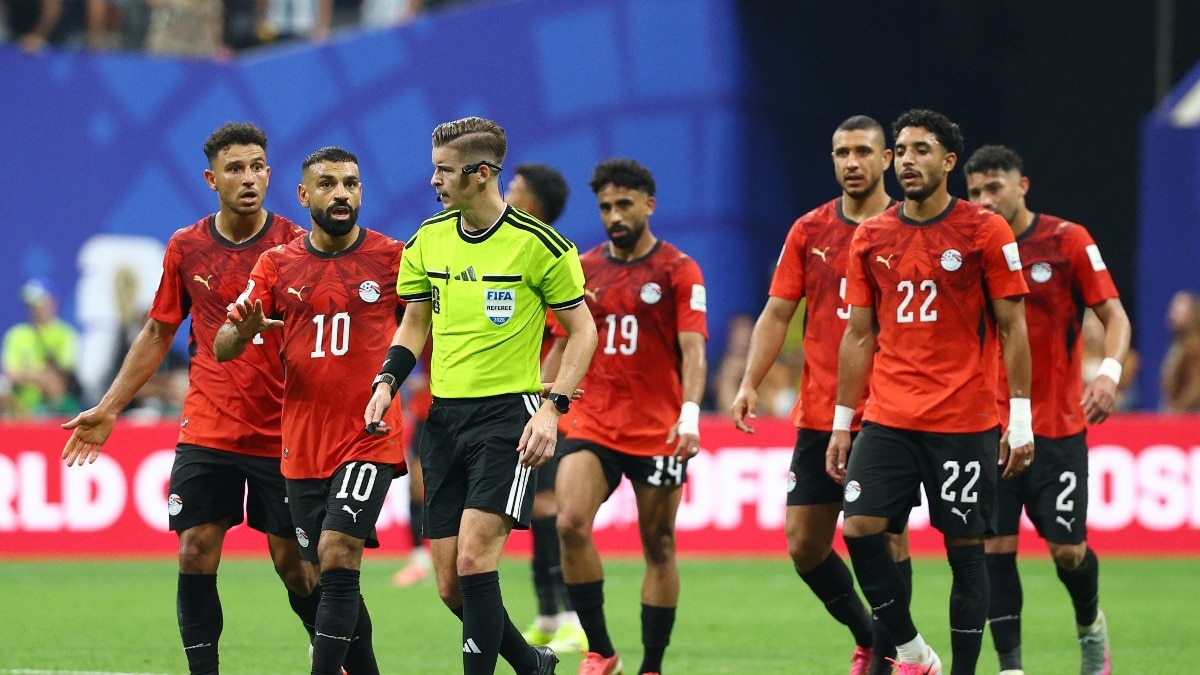
The usually electrifying atmosphere of a FIFA World Cup knockout stage match was overshadowed by a maelstrom of controversy and accusations following a dramatic encounter between Egypt and reigning champions Argentina. What unfolded on the pitch in Atlanta, culminating in a 3-2 victory for Argentina, left the Egyptian camp in disarray, prompting their head coach, Hossam Hassan, and forward Mostafa Zico to voice unprecedented allegations of a 'rigged' game and profound injustice at the hands of match officials and the Video Assistant Referee (VAR) system.
From the outset, the Round of 16 clash promised a captivating spectacle, pitting the tenacious Egyptian squad, dubbed the Pharaohs, against the formidable Albiceleste, led by their talismanic captain Lionel Messi. Egypt, defying expectations and displaying remarkable tactical discipline, carved out a surprising two-goal lead in the match's latter stages, seemingly on the brink of one of the greatest upsets in World Cup history. However, a stunning comeback from Argentina, fueled by goals from Cristian Romero, Messi, and a late winner from Enzo Fernandez, flipped the narrative, leaving Egypt heartbroken and simmering with outrage over two pivotal VAR-related incidents that they contend decisively altered the course of the contest.
The post-match press conference became a platform for an unfiltered outpouring of frustration from Hossam Hassan. With uncharacteristic candor, the Egyptian coach declared, "I'm not convinced with this outcome. I'm not convinced with the way things unfolded during this match. We have been treated unfairly today. We have suffered injustice." He elaborated further, asserting, "I will say what's on my mind regardless of the consequence, this was clearly a rigged match and the whole world saw it." These statements, coming from a national team coach in such a high-stakes tournament, immediately sent shockwaves across the global football community, igniting fervent debates about officiating integrity and VAR's role in the modern game.
Hassan’s frustration was not merely rooted in the pain of defeat but stemmed from a deep-seated conviction that his side had been superior, both tactically and in terms of on-field performance, for significant portions of the match. "We looked better compared to the reigning champions. We were better in everything, but the result, the outcome, was influenced by internal factors on the pitch, inside the game, and external factors ahead of the game," Hassan articulated. The 'internal factors' unequivocally pointed to specific refereeing decisions and VAR interventions, while 'external factors' alluded to broader organizational choices, particularly the contentious scheduling of a crucial knockout fixture.
The first flashpoint occurred after Egypt had already taken a deserved first-half lead through Yasser Ibrahim, a goal that set the tone for their ambitious approach. Their resolve was further cemented when goalkeeper Mostafa Shobeir delivered a moment of individual brilliance, spectacularly denying Lionel Messi from the penalty spot. This save not only preserved Egypt's lead but also injected a palpable surge of confidence into the Pharaohs' ranks, signaling their intent to challenge Argentina’s dominance directly. Early in the second half, in the 58th minute, Egypt believed they had delivered a decisive blow that would cement their path to the quarter-finals.
The sequence leading to Egypt's disallowed goal began deep inside their own half, with Haissem Hassan orchestrating a swift counter-attack. Carrying the ball with purpose and vision, Hassan initiated a move that saw Mohamed Salah, Egypt's talismanic forward, deliver a perfectly weighted pass into the path of Mostafa Zico. Zico, with the composure of a seasoned finisher, slotted the ball confidently past Argentina's goalkeeper, Emiliano Martinez, sparking exuberant celebrations from the Egyptian bench and their fervent supporters. It was a goal that would have put Egypt 2-0 up, a seemingly unassailable advantage against even a team of Argentina’s caliber.
However, the celebration was cut short. Referee Francois Letexier, alerted by the Video Assistant Referee, was instructed to review the incident on the pitch-side monitor. The VAR check focused on an alleged foul committed by Marwan Attia on Argentina defender Lisandro Martinez much earlier in the attacking phase. Replays, meticulously scrutinized, showed Attia pulling back Martinez and subsequently stepping on his foot during the build-up. After a period of intense deliberation, Letexier made the pivotal decision to overturn the goal, ruling that the foul had indeed occurred within the attacking phase leading directly to the scoring opportunity. This ruling, while technically within the VAR protocol if the foul is deemed to be part of the immediate attacking sequence, sparked immediate and widespread controversy.
The decision drew immediate criticism from various quarters, with former England goalkeeper Rob Green publicly questioning the scope of VAR’s intervention. Speaking on FOX Sports, Green stated, "Surely, this is not within VAR's realm to review this. It's a full length of the pitch away." His argument highlighted the ongoing debate regarding how far back in an attacking move VAR should scrutinize for infringements, especially when the initial foul is not immediately impactful on the goal-scoring opportunity itself and occurs a significant distance from the opposition's goal. Conversely, former FIFA referee Dr. Joe Machnik offered a different perspective, backing the decision. Machnik contended that if officials deemed the foul to be part of the attacking phase, then VAR was correct in recommending an on-field review, emphasizing adherence to the established protocols for reviewing goal-scoring opportunities.
Despite the immense disappointment and perceived injustice of the disallowed goal, Egypt demonstrated remarkable resilience. Just ten minutes later, they once again pierced Argentina's defense with another incisive attacking move. Salah and Hassan combined brilliantly, showcasing their intricate understanding and flair, before Mostafa Zico once again found the back of the net. This time, after a brief but anxious wait, the goal stood, restoring Egypt's two-goal advantage and rekindling their hopes of an unprecedented upset. The emotional rollercoaster of the previous VAR incident seemed to fuel their determination, making their second, legitimate goal all the more poignant.
Yet, the game was far from over, and Argentina, living up to their reputation as reigning champions, mounted an astonishing comeback. Cristian Romero initiated their resurgence, pulling one goal back with a powerful finish. The momentum visibly shifted, and the crowd sensed a potential turnaround. Predictably, Lionel Messi, with his characteristic genius, leveled the scores, netting a crucial equalizer that sent the Argentine faithful into raptures. The match, now balanced at 2-2, was heading into a dramatic conclusion, with both teams pushing for a winner. Deep into stoppage time, Enzo Fernandez delivered the decisive blow, heading home what proved to be the winning goal, completing Argentina's incredible escape and booking their place in the quarter-finals.
However, Argentina's celebrations were once again overshadowed by the lingering shadow of VAR controversy. As the Pharaohs desperately searched for a late equalizer, they appealed vehemently for a penalty after Alexis Mac Allister appeared to pull an Egyptian attacker inside the box. The incident occurred in a critical moment, with the game hanging in the balance, and the potential penalty could have offered Egypt a lifeline. Despite the strong appeals from the Egyptian players and bench, play continued without referee Letexier being called to review the incident on the pitch-side monitor. The lack of VAR intervention in this crucial moment, especially after the earlier, extensive review of Egypt's disallowed goal, ignited furious protests from the Egyptian bench.
The disparity in VAR application was a central point of contention for Egypt. The argument was simple: why was a foul deep in Argentina’s half, occurring many passes before a goal, deemed reviewable and goal-canceling, while a potential penalty incident inside the box in the dying moments of the game, directly affecting the scoreline, was apparently not considered worthy of an on-field review? The chaos that ensued saw Hossam Hassan booked for his impassioned protests, while one member of his coaching staff was shown a red card, illustrating the profound sense of injustice and exasperation that had enveloped the Egyptian delegation.
Hassan’s criticisms extended beyond the VAR decisions, encompassing the very logistical planning of the tournament. He directly questioned the scheduling of such a high-stakes knockout match at noon in Atlanta, a decision he believed demonstrated a fundamental lack of understanding of football and player welfare. "I dare to say that whoever schedules those matches is someone who doesn't and has never played football. At noon you go for a stroll, you go to get some fresh air, maybe go on a brunch, but you do not go onto the pitch," Hassan stated with biting sarcasm. Playing under the intense midday sun, often accompanied by high humidity, can severely impact player performance, stamina, and overall health, potentially skewing the competitive balance. Hassan’s contention was that such an environment was detrimental to both teams but particularly impactful on his squad, raising questions about fairness and competitive conditions.
The emotional toll of the match was palpable, particularly for Mostafa Zico, whose evening swung dramatically from the elation of scoring two goals to the heartbreak of a controversial defeat. His post-match remarks echoed his coach’s sentiments, expressing profound disillusionment. "The referee wasn’t good, he was unfair. His injustice was clear. He persecuted us from the start of the match. He doesn’t want us to win...It was a rigged game. It wasn’t our fault. That referee it seems like this match was rigged...We were winning 2-0, and he kept coming at us," Zico declared, his voice heavy with emotion. The forward's assertion that the referee 'persecuted' them from the outset and 'kept coming at them' after their lead, reinforced the narrative of systemic bias perceived by the Egyptian side.
Zico concluded his poignant post-match comments with a cutting, sarcastic swipe at the victorious reigning World champions. "Congratulations to Argentina on winning the World Cup. Congratulations. That's it. They don't need anything else." This remark, dripping with irony, implied that Argentina's victory was not solely due to their footballing prowess but was, in Egypt's view, facilitated by external factors and advantageous officiating, suggesting they were being 'given' the tournament. It was a powerful, albeit bitter, statement that resonated with the accusations of a predetermined outcome.
The dramatic events of the match and the subsequent fiery reactions have reignited the perennial debate surrounding VAR's implementation and consistency in major tournaments. While VAR was introduced with the noble aim of eliminating clear and obvious errors, its application continues to draw criticism for its perceived subjectivity, lack of transparency in decision-making processes, and inconsistencies between matches and even within the same game. The incident involving Egypt's disallowed goal, where a foul occurring far from the immediate goal-scoring action was deemed significant enough to overturn, contrasted sharply with the unreviewed penalty appeal in Argentina's box, highlighting the very inconsistencies that fuel such 'rigged' claims. Critics argue that VAR, instead of providing clarity, often adds another layer of controversy, leaving teams feeling unfairly treated and fans confused.
Furthermore, the allegations of a 'rigged' match, while extremely serious, are not entirely unprecedented in the annals of football history. However, for a national team coach to openly accuse a FIFA World Cup knockout game of being pre-determined represents a significant escalation in criticism, potentially inviting scrutiny from football's governing bodies. Such accusations, whether substantiated or not, erode public trust in the integrity of the sport and its officiating, an issue FIFA consistently strives to combat. The perceived notion that larger, more commercially powerful nations might receive preferential treatment is a sentiment that frequently surfaces in the shadow of controversial decisions, and Egypt’s outspokenness brought this underlying tension to the forefront.
Ultimately, the controversy is unlikely to change the result; Argentina has advanced to the quarter-finals, celebrating another dramatic escape on their World Cup journey. For Egypt, however, their finest World Cup performance, marked by grit, tactical astuteness, and two moments of genuine attacking brilliance, will forever be intertwined with the bitter taste of alleged injustice. They leave the tournament believing their promising campaign was derailed not by a superior opponent but by factors beyond their control, casting a long shadow over an otherwise memorable run. The match stands as a stark reminder of the delicate balance between human officiating and technological intervention, and the enduring passion, and sometimes profound frustration, that defines the beautiful game at its highest level.
source: India Today