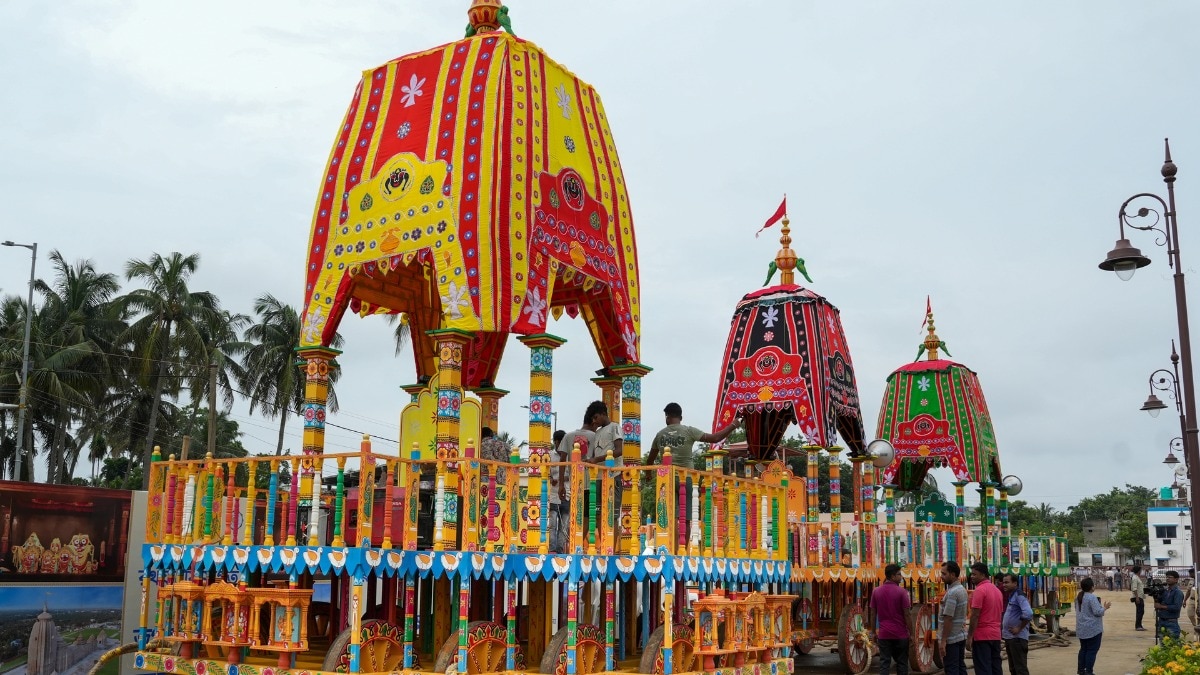
In a groundbreaking policy announcement, the West Bengal government has embarked on an unprecedented endeavor to integrate the Rath Yatra festival into the fabric of state-patronized cultural events. This move signifies a pivotal moment in the state’s engagement with its rich spiritual and communal traditions, promising to redefine the scale and scope of one of its most cherished annual celebrations. For the first time, a comprehensive framework has been established, extending both financial assistance and extensive administrative coordination to ensure the smooth conduct and enhanced pilgrim experience of the nine-day chariot festival.
The initiative, meticulously outlined in a directive issued by the state’s Information and Cultural Affairs Department on June 27, stipulates a substantial financial allocation of Rs 5 lakh to every identified Rath Yatra organizing committee across West Bengal. This direct financial injection is poised to empower local committees, many of which traditionally rely on community donations and voluntary efforts, to manage the intricate logistics and grand scale of the festival with greater efficacy and resources. District magistrates have been explicitly instructed to facilitate the disbursement of these funds, with cheques mandated to be handed over to authorized representatives of the organizing committees by July 13, strategically ahead of the festival's commencement on July 16.
Beyond direct grants to organizers, the government has further sanctioned an additional Rs 1 lakh for each district. This allocation is earmarked for the establishment of 'sewa shivirs,' or pilgrim facilitation camps, along the principal Rath Yatra routes and at major congregation points. These camps are designed to serve as crucial support hubs, offering a range of essential services to devotees. The envisioned provisions include readily available drinking water, critical Oral Rehydration Solution (ORS) packets to combat dehydration, immediate first-aid and emergency medical assistance, and dedicated information desks to guide pilgrims. Crucially, these 'sewa shivirs' are also tasked with providing specialized assistance to vulnerable groups, including elderly persons, women, children, and differently-abled devotees, ensuring a more inclusive and comfortable pilgrimage experience. District administrations are further empowered to introduce any other pilgrim-friendly services deemed necessary, fostering a responsive and adaptable support system.
The notification underscores the profound cultural and religious significance of the Rath Yatra, explicitly describing it as “one of the most significant religious and cultural festivals of the state” that attracts a vast multitude of devotees “from different parts of West Bengal and beyond.” This recognition serves as the foundational premise for the extensive support mechanism, highlighting the state's intent to uphold and bolster a tradition that resonates deeply with its populace and contributes significantly to its cultural landscape. The directive firmly mandates district administrations to guarantee all requisite arrangements for the festival's flawless execution, thereby elevating its status to a matter of state-level administrative priority.
A particularly noteworthy provision within the new policy empowers district magistrates to recommend additional Rath Yatra committees for financial assistance, extending beyond the initially identified beneficiaries. This progressive clause allows for a more inclusive and dynamic approach to state patronage. Such recommendations may be put forth if a committee demonstrates deservingness based on “its historical importance, public participation, scale of celebration or other relevant factors.” This flexibility, however, comes with a requirement for detailed justification from the district administration, ensuring transparency and merit-based allocation. This measure is expected to significantly broaden the scope of beneficiaries, potentially reaching numerous historically significant but perhaps less widely recognized Rath Yatras that have traditionally struggled for resources. Currently, the state officially recognizes approximately 26 such committees, a number poised for expansion under the new guidelines, reflecting a more comprehensive outreach strategy.
Observers within government circles suggest that this initiative represents a paradigm shift in state engagement with religious festivals. A senior government official remarked, “This is perhaps the first time the state government has framed such a comprehensive support mechanism around Rath Yatra, covering both financial assistance and administrative arrangements.” This statement encapsulates the novelty and holistic nature of the policy. The primary objective, as articulated, is to guarantee that organizers of both major, high-profile Rath Yatras and those of profound historical importance are equipped with the necessary resources to conduct the festival seamlessly and with the dignity it deserves. This commitment extends beyond mere financial aid, encompassing a robust administrative framework designed to anticipate and address the logistical complexities inherent in organizing large-scale public gatherings.
West Bengal is a repository of numerous prominent Rath Yatras, each with its unique heritage and following. Among the most celebrated is ISKCON's grand Kolkata procession, which draws immense crowds and global participation, showcasing a blend of traditional spiritual fervor with modern organizational prowess. Equally, if not more, historically significant is the Mahesh Rath Yatra in Hooghly, believed to have commenced in the 16th century. This ancient festival is revered as one of the oldest Rath celebrations outside the sacred city of Puri in Odisha, serving as a living testament to Bengal's enduring spiritual legacy. The state's new announcement thus signifies a substantial augmentation of governmental involvement in this annual festival, consolidating financial grants, intricate administrative coordination, and dedicated pilgrim services under a single, cohesive government initiative.
Delving deeper into the historical and cultural tapestry of West Bengal, the Rath Yatra is not merely a religious procession but a deeply ingrained cultural phenomenon. The Mahesh Rath Yatra, for instance, holds a unique place in history, dating back to 1396 when Drubananda Brahmachari, a devotee of Lord Jagannath, established the shrine in Mahesh. Legend has it that Shri Chaitanya Mahaprabhu, the 15th-century saint, visited Mahesh and initiated its vibrant Rath Yatra. The festival here spans over six centuries, making it a cornerstone of Bengal's cultural heritage. Its elaborate chariots, artisanal craftsmanship, and the fervent participation of generations of families underscore its profound communal significance. The state’s decision to patronize such festivals is therefore not just about religious appeasement but a strategic investment in preserving and promoting tangible and intangible cultural heritage that contributes to the state’s unique identity.
The administrative machinery behind this unprecedented rollout is multifaceted. The Information and Cultural Affairs Department, traditionally responsible for fostering and showcasing the state's cultural richness, has taken the lead in drafting and issuing the comprehensive notification. This departmental oversight ensures that the initiative aligns with broader cultural policy objectives. The role of district magistrates is pivotal for execution on the ground. They are not only responsible for the judicious disbursement of funds but also for orchestrating the logistical arrangements for the 'sewa shivirs' and coordinating various local agencies, including police, health services, and municipal bodies. This localized approach recognizes the diverse needs and specific challenges of organizing the festival across different districts, from densely populated urban centers like Kolkata to rural heartlands where community-led initiatives are paramount.
The financial grants, while substantial, also carry the implicit expectation of accountability and transparency. Organizing committees receiving Rs 5 lakh will likely be subject to certain reporting requirements, ensuring that funds are utilized for their intended purpose: enhancing the Rath Yatra experience for devotees and maintaining safety standards. This proactive financial support is expected to alleviate the considerable burden on local communities, who often struggle to raise sufficient funds for security, crowd management, sanitation, and provision of amenities during such large-scale events. The grants could also stimulate local economies, as funds are likely to be spent on local suppliers for materials, labor, and services required for chariot decorations, infrastructure setup, and pilgrim provisions.
The establishment of 'sewa shivirs' is a critical component of this initiative, focusing directly on pilgrim welfare. Mass gatherings invariably pose challenges related to health and safety, especially in hot and humid conditions. The provision of drinking water and ORS packets directly addresses the risk of dehydration and heatstroke, common ailments during summer festivals. First-aid and emergency medical assistance at these strategic points can be life-saving, ensuring immediate response to any health emergencies. Information desks play a crucial role in managing crowd flow, disseminating important updates, and assisting lost individuals or families, significantly enhancing the overall safety and convenience for millions of participants. The special attention given to elderly persons, women, children, and differently-abled devotees reflects a conscientious effort towards inclusivity, ensuring that the spiritual experience is accessible and comfortable for everyone, irrespective of their physical capabilities or vulnerabilities.
The flexibility granted to district magistrates to recommend additional committees for financial assistance is a testament to a nuanced understanding of Bengal’s diverse cultural landscape. This provision acknowledges that historical importance and public participation are not always correlated with the existing 'recognized' list. Many smaller, local Rath Yatras, though perhaps not drawing statewide crowds, possess immense historical value, unique local traditions, and serve as vital cultural anchors for their immediate communities. By providing a mechanism for DMs to propose such committees with detailed justifications, the state fosters a bottom-up approach to cultural preservation, ensuring that heritage beyond the most prominent events also receives the necessary support. This could unearth and revitalize lesser-known but equally significant traditions, enriching the state’s cultural mosaic.
From a broader socio-political perspective, this initiative can be seen through several lenses. While primarily presented as a cultural and administrative measure, it inevitably carries implications for state-citizen engagement and community outreach. In a diverse and populous state like West Bengal, proactive support for significant cultural festivals can foster goodwill and strengthen the bond between the government and its citizens. It signals a governmental commitment to celebrating and preserving regional identities and religious expressions. Furthermore, such initiatives can play a role in promoting communal harmony by celebrating shared cultural heritage that transcends specific religious denominations, often drawing participants and spectators from various backgrounds. The timing of such an announcement, ahead of a major festival, also ensures maximum visibility and immediate impact on the ground.
The economic ramifications of state patronage are also considerable. The infusion of funds for organizing committees and district-level infrastructure not only aids in the smooth conduct of the festival but also creates temporary employment opportunities, stimulates local trade, and boosts the informal economy around the festival routes. Vendors selling religious paraphernalia, food stalls, transport providers, and local artisans all stand to benefit from the enhanced footfall and organized support. This economic uplift, even if localized and seasonal, contributes positively to the livelihoods of many within the festival’s sphere of influence, making the cultural investment a multifaceted one.
Looking ahead, this comprehensive support mechanism for Rath Yatra could potentially serve as a blueprint for state engagement with other major cultural and religious festivals in West Bengal. The successful implementation of this model — encompassing financial aid, administrative coordination, and pilgrim welfare — could pave the way for similar initiatives in other significant annual events, further solidifying the state’s role as a custodian and promoter of its diverse heritage. The feedback received from organizing committees, pilgrims, and district administrations during and after this year’s festival will be crucial in refining and potentially expanding such policies in the future. This move represents not just a single-year commitment but a foundational step towards a more institutionalized and proactive approach to cultural and spiritual patronage.
In essence, West Bengal's decision to adopt a new, comprehensive support mechanism for the Rath Yatra transcends a mere administrative gesture. It embodies a deeper commitment to cultural preservation, pilgrim welfare, and community engagement. By providing financial muscle and logistical expertise, the state is not only ensuring the grand celebration of one of its most revered festivals but also investing in the social fabric, historical continuity, and spiritual vitality of its people. This landmark initiative is poised to leave an indelible mark on how cultural festivals are organized and experienced across the state, setting a new precedent for state patronage in the realm of religious and cultural heritage.
source: India Today